Business Line of Credit for Startup: Fund Your Growth

Starting a business means finding the right money to grow. A business line of credit is a great option. It lets you borrow money as you need it and only pay interest on what you use.

This is different from a regular loan. With a line of credit, you can borrow and pay back money over and over. This is helpful for managing your cash flow, especially since 44% of startups fail in 2022 for lack of funds, a Skynova study found.

Key Takeaways:

  • A business line of credit for startups offers a flexible and revolving source of funding, with credit limits typically ranging from $10,000 to $100,000.
  • Interest rates for startup lines of credit typically fall between 8% and 24%, reflecting the higher risk profile.
  • Repayment terms may include interest-only payments for the first 6-12 months, followed by minimum monthly payments of 2-3% of the outstanding balance.
  • Secured business lines of credit for startups with traction can have limits between $10,000 and $100,000 and interest rates of 8% to 13%.
  • Unsecured business lines of credit for early-stage startups may offer limits between $5,000 and $50,000 with interest rates of 12% to 20%.

Understanding Business Lines of Credit for Startups

As an entrepreneur, finding the right financial help is key for your startup’s growth. Business lines of credit are a flexible option. They offer the funds needed to grow your business.

Defining Revolving Credit Facilities

A business line of credit lets you borrow and repay funds as you need. You can do this up to a set limit. This way, you get the money you need when you need it, without the strict rules of a traditional loan.

Key Components of Startup Credit Lines

  • Credit limits usually start at $10,000 to $100,000, and can grow as your business grows.
  • Interest rates are higher because startups are seen as riskier, with APRs from 8% to 24%.
  • Draw periods are flexible, lasting 12-24 months, allowing you to borrow and repay as needed.

How Credit Lines Differ from Traditional Loans

Business lines of credit are more flexible than traditional loans. With a credit line, you can get money when you need it. Then, you can repay and borrow again. This is different from getting a big sum upfront and making fixed payments every month.

Feature Business Line of Credit Traditional Loan
Funding Access Revolving, on-demand One-time, lump sum
Repayment Flexible, as needed Fixed monthly payments
Utilization Borrow, repay, and re-borrow Repay the full loan amount

Understanding business lines of credit helps startups manage their working capital better. It’s a great way to fuel growth.

The Importance of Working Capital for Early-Stage Businesses

Managing your working capital is key for early-stage businesses. Working capital is the difference between what you own and what you owe. It shows if you can pay for things you need now and run your business every day.

Having enough working capital loans is vital for startups. It helps cover costs like salaries, rent, and marketing. A line of credit gives you the freedom to borrow when you need to, helping with cash flow issues.

“Working capital is the lifeblood of any business, especially for early-stage startups. Maintaining a strong working capital position can mean the difference between thriving and simply surviving.”

Good working capital management lets your business grow and adapt. Tools like cash flow forecasts and working capital ratios help make smart financial choices. This keeps your company healthy and ready for new opportunities.

working capital loans

Effective working capital management is more than just having cash. It’s about balancing what you own and owe to support your business’s future. Focus on working capital to help your startup grow and overcome early-stage challenges.

How Business Line of Credit for Startup Works

Getting a business line of credit can help your startup grow. You need a good personal credit score (650-680) and a solid financial plan. For startups without income, having investors or contracts can also help.

Application Process Overview

The first step is checking your credit score and your startup’s finances. Lenders also look at investor support or contracts for startups without income. This helps them see if your business is a good risk.

Drawing and Repayment Terms

Startups usually get interest-only payments for 6-12 months. Then, they must pay 2-3% of what they owe each month. This break can help startups grow before they have to pay back.

Interest Calculation Methods

One great thing about business lines of credit is how interest is charged. You only pay on what you use, not the whole credit limit. This can save a lot of money for startups.

Looking into startup funding options and alternative lending solutions can help you find the best financing. A business line of credit is flexible and can help manage your money. It’s a good way to take advantage of new chances as they come up.

startup funding options

Qualifying Requirements for Startup Credit Lines

Getting a business line of credit for your startup can really help. It gives you the working capital you need to grow. But, lenders have certain rules that startups must follow to qualify. Knowing these rules is key when looking for small business financing through a startup funding line of credit.

Your personal credit score is a big deal for lenders. They usually want a score of 680 or higher. But, some might accept scores as low as 560-625. Also, your business needs to have been running for at least 6 months to 2 years. You’ll need to show that your business makes at least $100,000 a year.

  • Minimum credit score: 680 (some lenders may accept 560-625)
  • Business operating time: 6 months to 2 years
  • Minimum annual revenue: $100,000

For unsecured lines of credit, you might need to give a personal guarantee. Secured options might ask for something you own, like inventory or real estate. Some lenders also like businesses to be set up as corporations or LLCs, not general partnerships or sole proprietorships.

Requirement Details
Collateral Inventory, accounts receivable, real estate
Business Structure Corporations, LLCs (excludes general partnerships, sole proprietorships)

Meeting these startup funding criteria can help you get a business line of credit. This can give your startup the small business financing it needs to succeed.

Startup Financing

Benefits of Securing a Business Credit Line

Getting a business line of credit opens up many advantages for early-stage startups. It lets you manage your working capital in a flexible way. Unlike working capital loans, you can get funds when you need them, only taking what you use.

This flexibility helps you quickly adapt to changes and unexpected needs. It’s a big plus for startups facing rapid growth or sudden issues.

Using a business credit line wisely can also improve your credit score. Even a small, well-managed credit line can increase your score by 50 to 100 points in a year. This is a great start for your business’s financial health, showing lenders you’re a reliable borrower.

Also, a business line of credit for startup acts as a safety net. It gives you $5,000 to $20,000 quickly, in just 1-3 business days. This can be a lifesaver, helping you handle unexpected problems without hurting your business or growth plans.

Benefit Description
Flexibility in Fund Management Access capital on-demand, drawing only what’s needed
Building Business Credit History Responsible usage can boost credit score by 50-100 points in 12 months
Emergency Fund Access Gain access to $5,000 to $20,000 within 1-3 business days

Business line of credit for startup benefits

“A business line of credit can be a game-changer for early-stage startups, providing the flexibility, credit-building power, and emergency funding needed to navigate the unpredictable journey of rapid growth.”

Types of Available Credit Lines for New Businesses

As an entrepreneur, you have many alternative lending solutions and startup funding options to grow your business. The business line of credit is a popular choice. It offers flexible financing for new businesses.

There are several types of credit lines for startups. Each has its own features and benefits:

  • Secured business lines of credit are backed by collateral. They have lower interest rates but require assets as security.
  • Unsecured business lines of credit rely on your creditworthiness. They often have higher rates but offer quick access to funds.
  • Revolving business lines of credit let you borrow, repay, and borrow again. They are very flexible.
  • Non-revolving business lines of credit give you a one-time credit line. It closes after repayment.
  • Convertible business lines of credit combine traditional lines with the option to convert to term loans.
  • Venture debt lines of credit are for VC-backed startups. They offer specialized lending solutions.

Choosing the right credit line for your startup is important. You need to consider your financing needs, collateral, and risk profile. This will help you find the best solution for your business goals and growth strategy.

Credit Line Type Key Features Typical Interest Rates
Secured Business Line Backed by collateral, lower rates Wells Fargo Prime + 7.99% to 17.99%
Unsecured Business Line Based on creditworthiness, higher rates, quicker access Wells Fargo Prime + 7.99% to 17.99%
Revolving Business Line Borrow, repay, and borrow again Wells Fargo Prime + 7.99% to 17.99%
Non-revolving Business Line One-time credit line, closes after repayment Wells Fargo Prime + 7.99% to 17.99%
Convertible Business Line Combines line of credit and term loan features Wells Fargo Prime + 7.99% to 17.99%
Venture Debt Line Tailored for VC-backed startups Varies by lender

Understanding the different options helps you make a smart choice. You can find the alternative lending solutions and startup funding options that support your business’s growth.

startup funding options

Secured vs. Unsecured Credit Lines

Startups often face a big choice when looking for business financing. They must decide between secured and unsecured credit lines. Knowing the differences can help you pick the right option for your business.

Collateral Requirements

Secured lines of credit need collateral, like real estate or inventory. This collateral is a guarantee for the lender. It usually means lower interest rates for you. On the other hand, unsecured lines don’t need any assets and are based on your creditworthiness.

Interest Rate Comparisons

Secured credit lines for startups have interest rates from 8% to 13%. Unsecured lines have higher rates, between 12% and 20%. Secured lines are better because they offer more favorable terms due to the collateral.

Risk Assessment Factors

Lenders look at several things when deciding to give a credit line. They check your startup’s financial health, your credit score, and your revenue. Secured lines might be easier to get if you have valuable assets. Unsecured lines are better for businesses without much physical collateral.

Choosing between a secured or unsecured business line of credit depends on your startup’s needs. Think about the collateral, interest rates, and risk to pick the best option for your unsecured business loans or secured business financing.

Secured vs. Unsecured Credit Lines

Credit Score Requirements and Financial Criteria

To get a business line of credit, you need to meet certain credit score and financial standards. Lenders usually want a personal FICO score of at least 680. But, some might accept scores between 560 and 625.

Lenders also look at your business’s financial health. They check for a minimum annual revenue of $100,000. Your business should have been operating for at least 6 months to 2 years. They also want proof of steady cash flow.

Other factors like your business’s type, structure, and debt are important too. Lenders use these to decide if you’re creditworthy.

Criteria Traditional Lenders Online Lenders
Minimum Personal Credit Score 680+ 650-680
Minimum Annual Revenue $100,000 $50,000
Minimum Time in Business 2 years 6 months
Collateral Requirements Typically required May be required
Industry Restrictions Higher-risk industries may face additional scrutiny May be more lenient on industry type

Knowing the startup funding criteria and small business financing needs helps. It prepares your business for the funding it needs to grow and succeed.

startup funding criteria

Managing Your Business Credit Line Effectively

As an entrepreneur, managing your business line of credit is key. It helps keep your finances healthy and grows your startup. By using smart strategies, you can make the most of this tool. This keeps your working capital in good shape.

Best Practices for Usage

It’s vital to keep your credit line use low. The 2023 Small Business Credit Survey by the Federal Reserve Banks shows 43 percent of small businesses use lines of credit. Don’t use up all your credit for big investments. Instead, use it for short-term needs.

This way, you build a good credit history and save on interest.

Repayment Strategies

Creating a smart repayment plan is crucial. Pay on time to improve your business credit score. This can lead to better financing terms later. Try to pay more than the minimum to lower your debt and interest.

For example, a 10 percent interest rate means a $880 monthly payment for a $10,000 loan in a year.

Use your business line of credit wisely for growth, not as a financial fix. Follow best practices and smart repayment plans. This unlocks the full potential of your financing and boosts your startup’s success.

business line of credit for startup

Common Pitfalls to Avoid When Using Credit Lines

Starting a business can be risky, especially when it comes to financing. One big mistake is using credit lines for personal stuff instead of business needs. This can lead to a lot of debt and hurt your business’s growth.

Another mistake is relying too much on credit instead of making money. While credit lines are helpful, they shouldn’t replace making a profit. Startups need to balance using credit wisely and making money to grow.

Not planning how to pay back the credit line is also a big mistake. Entrepreneurs need to understand the credit line’s terms and make a solid repayment plan. Not doing this can lead to debt, hurt your credit, and make it hard to get more money in the future.

  • Avoid using the credit line for personal expenses
  • Maintain a balance between credit usage and revenue generation
  • Develop a clear repayment plan to ensure timely and consistent payments

Startups should also not use credit lines for big, long-term investments. They are best for short-term needs like managing cash flow or unexpected costs. Being too comfortable with your finances is another trap. Entrepreneurs should always look for better financing options as their business grows.

Startup Financing Challenges Potential Solutions
High-interest rates and hidden fees Research and compare credit line offers, negotiate terms, and explore alternative financing options
Time-consuming application process Prepare and organize all required documentation in advance to streamline the process
Lower credit limits than installment loans Supplement credit line with other financing sources to meet funding needs
Predatory lending practices Carefully evaluate lender reputation and terms, and seek guidance from financial advisors

By knowing these common mistakes and taking steps to avoid them, startups can use credit lines wisely. This helps them grow and succeed without facing the risks and challenges that come with it.

Alternative Financing Options for Startups

Getting traditional business loans can be tough for startups, especially when they’re just starting. But, there are many alternative lending solutions and non-traditional financing options. These can help your startup grow.

Comparing Different Funding Sources

Startups have many choices, like merchant cash advances, business credit cards, personal loans, and angel investors. Novo Funding offers up to $75,000 with a 1.5% monthly rate. American Express and Chase Bank have business credit cards. Personal loans are also an option if the founder has good credit.

Angel investors offer seed funding in exchange for equity. They provide capital and guidance to help startups succeed. Venture capitalists invest in startups ready to launch products.

When to Choose Alternative Solutions

Alternative financing is good for startups needing large amounts of funding for long-term projects. It’s also better when you can get better interest rates or don’t qualify for traditional loans. These options are useful for startups needing quick access to capital or lack collateral for bank loans.

Startups should think about their financing needs, credit, and goals to find the best alternative. Exploring these options can help entrepreneurs get the resources they need to grow their businesses.

alternative lending solutions

Alternative Financing Option Key Features Ideal Scenario
Merchant Cash Advance Up to $75,000 with 1.5% monthly rate Startups needing immediate access to capital
Business Credit Card Revolving credit option from providers like American Express and Chase Startups with good credit profiles
Personal Loan Can be used for business funding if founder has good credit Startups without collateral for traditional loans
Angel Investment Seed funding and mentorship in exchange for equity Startups in need of both capital and guidance
Venture Capital Investment in startups ready to launch products Startups with a clear growth trajectory

Interest Rates and Fee Structures

Understanding interest rates and fees is key when looking for startup funding. These factors can greatly affect your business’s costs and success.

Business line of credit rates can vary a lot. They can be as low as 8% or as high as 60% or more. On average, rates in Q2 2024 were between 7.65% and 9.15% APR. But, some lenders offer better rates, like Fundible’s 6.00% simple interest or Bluevine’s 7.80%.

Business lines of credit also have fees. These can include annual fees, origination fees, draw fees, and maintenance fees. For example, American Express® Business Line of Credit has fees ranging from 3.00% to 27.00% monthly, depending on the term.

Lender Interest Rate Fees
Fundible From 6.00% simple interest No fees mentioned
SMB Compass 7.99% APR No fees mentioned
Bank of America 9.00% APR No fees mentioned
Wells Fargo 9.75% APR No fees mentioned
Bluevine 7.80% simple interest No fees mentioned
OnDeck 55.90% APR No fees mentioned
Fundbox 4.66% or 8.99% weekly fees No fees mentioned
American Express® Business Line of Credit No rate mentioned 3.00% to 27.00% total monthly fees
SBA Line of Credit 11.00% as of November 2024 No fees mentioned

When looking at startup funding costs and small business financing rates, compare different lenders. Think about the total cost, including interest and fees. Knowing these details helps you choose the best option for your business.

Building a Strong Application for Credit Line Approval

Getting a business line of credit for your startup is a detailed process. You need to show your business is financially stable and has growth potential. This means gathering and presenting the right documents.

Required Documentation

  • Business and personal tax returns
  • Bank statements
  • Financial projections
  • Detailed business plan

These documents help lenders understand your startup’s financial health. For startups without revenue yet, highlight secured contracts and partnerships. Show a clear path to making money.

Financial Statement Preparation

Well-prepared financial statements are key for your application. Lenders like American Express will look at your cash flow and revenue trends. They also check if you’re profitable.

Linking your business checking account and providing detailed data can make your application stronger. By doing this, you boost your chances of getting the startup funding application and small business loan requirements you need.

“Building a strong application for a business credit line is essential for startups seeking to secure the funding they need to grow and thrive.”

Impact on Business Growth and Scalability

Getting a business line of credit can really help your startup grow. It gives you the money you need to grab new chances, grow fast, and get bigger without losing control. It’s great for e-commerce startups that are growing quickly or tech companies that want to boost their marketing.

Thanks to tech and global markets, growing your business is easier. To grow, you need to be able to handle more customers and work more efficiently. This keeps you ahead of rivals and makes investors happy.

To grow, you need to raise money, invest in tech, market your business, introduce new things, and hire smart people. Using your business credit line wisely lets you focus on growing and set your startup up for success.

“Scalability in business refers to an organization’s ability to grow to meet increased demand. Scalable businesses typically have flexible systems, talented teams, and documented processes.”

To grow without losing control, you need to know where you are, set smart goals, pick the right strategy, manage your resources, and check your progress. With a good business line of credit, your startup can reach its full growth potential and take advantage of new market trends.

Case Studies: Successful Startup Credit Line Usage

Starting a new business is tough, but smart founders use business credit lines to grow. Let’s look at some real examples of startups using these tools to succeed.

A SaaS startup in San Francisco got a $50,000 credit line for a big product launch. They used it for marketing, hiring, and launching their software. After selling their product, they paid back the credit line and used it again for more marketing. This helped them grow faster.

In Boston, a biotech startup got a $100,000 credit line to wait for their next big investment. It let them keep working on research and avoid delays. By managing their credit line well, they hit their goals and got more investment.

An e-commerce business in Chicago used a $75,000 credit line for inventory changes. This kept their cash flow steady, let them grow, and take advantage of busy shopping times. They grew steadily and became a strong player in the market.

These startup funding success stories and business credit line examples show how credit lines can change a startup’s path. With the right financing, entrepreneurs can overcome startup hurdles and set their businesses up for success.

Conclusion

Business lines of credit are key for startups to overcome early challenges and grow. They offer a balance of easy access and low cost. This helps founders manage cash flow, grab opportunities, and build a good credit history.

A business line of credit might not fit every startup’s needs. But, it can be very useful if used wisely. Knowing how to use it can help your business grow from the start to success.

When looking at financing options, think about how a business line of credit can help your startup. It can be a big help in growing and scaling your business. With the right strategy, it can be a valuable tool for your success.


Finance vs Business Degree: Your Career Path Guide

Choosing between a finance degree and a business degree can shape your career and earnings. Both fields have unique opportunities. It’s important to know the differences to find the right fit for your goals and skills.

This guide will cover the basics of finance and business education. We’ll look at the main differences between the two. You’ll also learn about career options, salaries, and industry demand. By the end, you’ll know which degree is best for your future success.

Key Takeaways

  • Finance degrees focus on financial data analysis, investments, and opportunities, while business degrees cover a broader range of specializations in economics, management, and banking.
  • Both finance and business degrees require strong numerical skills and offer promising job prospects, with finance jobs projected to grow by 11% and accounting jobs by 10% through 2026.
  • Finance careers often involve roles such as financial analyst, investment banker, and personal finance advisor, while business degrees lead to positions in sales management, marketing, and human resources.
  • Median salaries for finance roles tend to be higher than those in business, with opportunities for substantial earnings growth, particularly at the executive level.
  • Industry demand and job market prospects are favorable for both finance and business graduates, with a range of specialization options and concentrations available within each degree path.

Understanding the Fundamentals of Finance and Business Education

Choosing between finance and business education is a big decision. Both offer great career paths but focus differently. Knowing the differences helps you pick the right path for your interests and goals.

Core Differences Between Finance and Business Programs

Finance programs focus on financial analysis, investment, and risk management. They teach students about accounting, economics, and math. Business programs, however, cover more topics like management, marketing, and entrepreneurship. They focus on leadership, communication, and solving problems.

Key Skills Development in Each Degree Path

Both finance and business degrees need strong analytical and problem-solving skills. Finance programs emphasize advanced math, data analysis, and financial models. Business programs focus on strategic thinking, decision-making, and communication.

Academic Prerequisites and Requirements

Finance and business programs need a strong math and economics background. Finance requires advanced calculus, statistics, and financial theory. Business programs focus on management, marketing, and economics.

Choosing between finance and business depends on your interests and career goals. Knowing the differences and skills needed helps you make a choice that leads to a fulfilling career.

college majors

“Finance and business programs offer distinct yet complementary paths to success. The choice ultimately comes down to your personal interests and the specific career direction you wish to pursue.”

Finance vs Business Degree: Making the Right Choice

Choosing between a finance degree and a business degree depends on your career goals and interests. If you love financial markets, investment strategies, and data analysis, a finance degree might be for you. If you’re more interested in how organizations work and manage, a business degree could be the better choice.

Think about salary, job demand, and your skills when deciding. Finance majors started with a median salary of $57,750 in 2019. Those with an associate degree in accounting started at $45,560 in 2021. A Master’s in Finance can lead to a total pay of $140,166 annually in the U.S., with salaries ranging from $92,000 to $217,000.

Degree Median Starting Salary Estimated Total Pay
Finance Major $57,750 $140,166
Accounting (Associate Degree) $45,560 N/A
MBA N/A $100,034

The job market is also important. The management occupations sector, which includes finance, is growing fast. It’s expected to see more than average growth from 2022 to 2032, with 1.1 million job openings each year.

In the end, your choice between finance and business depends on your interests and goals. Think about your strengths, interests, and the opportunities each degree offers. Make the decision that fits your choosing a major, career planning, and degree comparison best.

Choosing a major

Career Opportunities in Finance

Thinking about a career in finance? You’ll find many options. The field includes investment banking, corporate finance, financial analysis, and risk management. Each offers a chance to grow and succeed.

Investment Banking and Corporate Finance

Investment bankers help clients with big financial decisions. They advise on mergers, raise capital, and manage deals. You’ll need a master’s degree or a CFA certification. In the U.S., they earn about $96,543 a year.

Financial Analysis and Planning

Financial analysts and planners give advice on money matters. They look at data, make budgets, and plan investments. A finance degree is usually needed. They make around $96,220 a year.

Risk Management and Insurance

Risk managers and insurance pros protect against financial losses. They need special knowledge and certifications. Salaries range from $95,169 for underwriters to $82,210 for examiners.

No matter your interests, finance offers many chances to grow. With the right education and skills, you can have a fulfilling career in finance.

finance careers

Finance Career Average Salary
Investment Banking $96,543
Financial Analyst $96,220
Underwriter $95,169
Financial Advisor $95,390
Financial Examiner $82,210

Business Degree Career Paths

Getting a business degree opens up many exciting career paths. You can explore management roles, entrepreneurship, or business careers. A business education gives you the skills and knowledge to succeed in many industries.

One great career for business graduates is being a management analyst. They look at how an organization works and find ways to improve it. With a 11% job growth by 2033, management analysts can find jobs in consulting, government, and private companies.

Another sought-after job is a marketing manager. They create marketing plans, study what customers want, and make brands known. With a 10% job growth by 2033, marketing managers are key to business success in many fields.

For those who love working with people, being a human resources specialist is a good choice. They handle hiring, training, and solving problems in the workplace. With a 7% job growth by 2033, human resources specialists are in demand, offering a stable career.

Lastly, a business degree can spark your entrepreneurial spirit. Entrepreneurs use their business smarts, leadership, and problem-solving to start and grow their own businesses. Entrepreneurship offers flexibility and freedom, appealing to many business graduates.

A business degree gives you a wide range of skills and opens many doors. Whether you’re interested in management, marketing, human resources, or entrepreneurship, a business education offers flexibility and growth opportunities.

business careers

Career Average Salary (2023) Projected Job Growth (2033)
Financial Analyst $99,890 9%
Financial Manager $156,100 17%
Management Analyst $99,410 11%
Personal Financial Advisor $99,580 17%
Securities, Commodities, and Financial Services Sales Agent $76,900 7%

A business degree offers many career paths, from management and marketing to human resources and entrepreneurship. With strong job growth and good salaries, a business degree can lead to a rewarding and fulfilling career in the business world.

Salary Expectations and Growth Potential

Getting a finance or business degree can lead to high earnings. Starting jobs like financial analysts and management analysts have median salaries around $84,300 and $82,450. But, your salary can grow a lot as you advance in your career.

Mid-Career Earning Potential

With more experience, your salary can jump up a lot. Mid-career finance and business professionals see big pay hikes. Financial managers make a median of $131,710, and business operations managers earn $102,450 a year.

Executive-Level Compensation

At the top, salaries are truly impressive. CFOs and other C-suite leaders can earn over $250,000 a year. An MBA graduate in consulting can make an average of $150,000.

Both finance and business degrees promise good salary expectations and growth potential. Your earning potential depends on your industry, location, and skills. But, these fields offer many chances for career and financial growth.

Finance and Business Degree Salaries

“The median starting salary of MBAs is $125,000 compared to $75,000 for bachelor’s degree holders.”

Required Skills and Competencies

To excel in finance and business, you need a wide range of professional competencies. Whether you’re studying finance or business, learning these key skills is crucial for a successful career.

Key Financial Skills

  • Strong analytical and problem-solving abilities
  • Proficiency in financial modeling and data analysis
  • Expertise in risk assessment and management
  • Thorough understanding of financial reporting, accounting, and compliance
  • Strategic financial planning and forecasting skills
  • Adeptness in utilizing financial technology and digital tools

Critical Business Skills

  1. Effective communication and interpersonal skills
  2. Strategic thinking and decision-making capabilities
  3. Leadership and team management experience
  4. Project management and operational efficiency expertise
  5. Adaptability and continuous learning mindset
  6. Ethical decision-making and regulatory compliance knowledge

Having a balanced skill set, including financial skills and business skills, is a big plus. It helps you handle complex tasks and grab opportunities in your career. By improving these professional competencies, you’re ready to face challenges and make the most of your career path.

Financial Skills Business Skills
Financial Modeling Strategic Thinking
Data Analysis Leadership
Risk Management Project Management
Financial Reporting Communication
Financial Planning Adaptability

Investing in financial skills and business skills is key. It gives you the skills to excel in finance or business.

Financial and Business Skills

“The most valuable asset you can possess in today’s job market is a diverse skillset that combines both financial and business acumen.”

Industry Demand and Job Market Analysis

The job market for finance and business roles is strong and always changing. The Bureau of Labor Statistics (BLS) says jobs in these fields will grow by 7% by 2028. This growth is due to new tech, the global economy’s expansion, and more complex financial rules.

Current Market Trends

The finance world is growing because of data and new tech. Jobs in financial analysis, risk management, and corporate finance are in demand. The business world is also expanding, offering jobs in marketing, operations, and strategic planning.

Future Growth Projections

The outlook for finance and business jobs looks good for the next few years. The BLS predicts a 11% increase in finance jobs and a 10% increase in business jobs by 2026. New areas like fintech and sustainable business are creating more job opportunities.

finance and business job market

As the economy and job market change, finance and business graduates will have many career options. These jobs often come with good pay and chances for advancement. Staying up-to-date with industry trends and employment outlook helps in making the right career choices.

Specialization Options and Concentrations

Starting your finance or business degree journey opens up many specializations. These can greatly improve your career and earning potential. Whether you’re drawn to finance specializations or business concentrations, knowing your options is key to choosing the right academic focus.

Finance students often choose to specialize in investment management, corporate finance, financial planning, or risk management. These areas let you dive deep into your interests. This way, you’re ready for top jobs in the financial world.

Business students might focus on marketing, international business, entrepreneurship, or human resource management. By studying what you love, you become more attractive to employers. This opens up many business opportunities for you.

Finance Specializations Business Concentrations
Investment Management Marketing
Corporate Finance International Business
Financial Planning Entrepreneurship
Risk Management Human Resource Management

Your choice of finance specialization or business concentration shapes your career. It affects your earning potential too. So, take time to explore and choose wisely, aligning with your future goals.

finance specializations

Professional Certifications and Additional Credentials

In finance and business, getting certified can boost your career. These qualifications show you’re an expert and dedicated to your field. They can open up better job opportunities, increase your pay, and help you move up in your career.

Finance-Specific Certifications

Top finance certifications include the Certified Financial Planner (CFP), Chartered Financial Analyst (CFA), and Certified Public Accountant (CPA). The CPA is especially popular in the U.S. for its wide recognition and importance.

  • Certified Financial Planner (CFP): Covers all aspects of financial planning, like investments, taxes, and estate planning.
  • Chartered Financial Analyst (CFA): Shows you’re skilled in managing portfolios, analyzing investments, and understanding global finance.
  • Certified Public Accountant (CPA): Means you’re good at accounting, taxes, and financial reports, making you valuable in finance and accounting.

Business Management Certifications

Business management certifications can also improve your career. These include the Project Management Professional (PMP), Six Sigma, and Certified Business Analysis Professional (CBAP) designations.

  1. Project Management Professional (PMP): Confirms your knowledge in project management, including methods and best practices.
  2. Six Sigma: Shows you can make business processes better and more efficient by using data to make decisions.
  3. Certified Business Analysis Professional (CBAP): Highlights your skill in finding business needs, analyzing them, and making strategic suggestions.

Getting these certifications takes time and money. But, the benefits like career growth, higher pay, and respect from peers make it worth it.

professional credentials

Internship and Experience Requirements

Internships are key for finance and business students to get ready for their careers. Many entry-level finance jobs need internship experience. Business programs also include internships to teach real-world skills.

Having an internship can really help your job chances after graduation. Internships let you use what you learned in class, get specific skills, and meet professionals. They give you a peek into what different jobs in finance and business are like.

Companies in finance and business really like candidates with internship or work experience. These experiences show you can work well in a professional setting, team up with others, and help with projects. Internships also show your problem-solving skills, attention to detail, and dedication to growing professionally.

Internship Requirements Percentage
Internships available for students pursuing a Bachelor’s or Master’s degree in Statistics, Accounting, Finance, Economics, Economic Development, or related fields 100%
Internships requiring advanced skills in research, writing, organization, analytics, and data entry, as well as attention to detail 100%
Internships available to students majoring in Statistics, Mathematics, Computer Science, Finance, Economics, Actuarial Science, and Data Science 100%
Internships available to students pursuing majors/minors in Economics, Finance, Business, Engineering, Marketing, Statistics, English, Mathematics, Public Relations, Communications, Urban Planning, Psychology, Technology, or Management 100%
Internships requiring effective interpersonal skills, oral and written communication, strong presentation/training skills, and PC proficiency 100%

Whether you want to work in investment banking, financial analysis, or business management, internships are crucial. They help you get the skills and knowledge that employers want.

Global Opportunities and International Markets

Both international finance and global business degrees open doors to exciting career prospects. Finance professionals can thrive in global financial centers, international banks, or cross-border corporate roles. Business graduates can pursue opportunities in international trade, global marketing, or cross-cultural management.

Understanding global markets and cultural differences is crucial in both fields. An international business degree includes subjects like international economics and global supply chain management. It equips graduates with specialized knowledge to navigate the global business landscape.

Compared to a traditional business administration degree, an international business program focuses more on global geopolitics. This includes political, economic, and social factors that influence international business operations. It can lead to careers as international trade compliance officers, global business development managers, or international marketing specialists.

International business degrees also offer enhanced networking opportunities. Students connect with classmates from around the world. This global network is invaluable for professionals seeking careers in international finance or global business.

Career Path Median Pay Estimated Job Growth (2022-2032)
Management Analyst $99,410 10%
Marketing Manager $156,580 6%
Executive $103,840 3%
Human Resources Manager $136,350 5%
Financial Analyst $99,890 8%
Economist $115,730 6%

Whether you choose a finance or business degree, the opportunity to work in international finance, global business, and multinational corporations is exciting. It can lead to a fulfilling and rewarding career.

Networking and Professional Development

Getting ahead in finance and business is more than just a degree. Building a strong professional network and keeping your skills sharp are key. These steps are vital for career advancement and making industry connections.

Joining professional groups, attending conferences, and using alumni networks are great ways to meet people. These activities can lead to new job chances, mentorship, and insights into the industry.

It’s also important to keep learning. Going to workshops, seminars, and getting certifications shows you’re serious about your career. It helps you stay ahead in the finance and business worlds.

Certification Median Salary Job Growth Outlook
Certified Financial Planner (CFP) $87,850 5% (Faster than average)
Chartered Financial Analyst (CFA) $81,590 6% (Faster than average)
Certified Public Accountant (CPA) $73,560 6% (Faster than average)

Investing in your professional network and continuous development can change your career game. By using these chances, you can set yourself up for long-term success and career advancement in your field.

“The greatest asset you can have is your network. An interconnected web of relationships and contacts can be your most valuable resource, opening doors to new opportunities and providing invaluable support throughout your career.”

Work-Life Balance Considerations

When choosing between finance and business careers, work-life balance is key. Finance jobs, especially in investment banking, often mean long hours and stress. Business careers, however, can offer different balances depending on the role and industry.

Financial analysts usually work over 40 hours a week. Junior investment bankers might work up to 100 hours. The U.S. ranks 29th in work-life balance, with long hours and many working over 50 hours a week. Canada ranks 14th, with fewer working long hours.

Think about your personal priorities and lifestyle when choosing a career. Consider the trade-offs between high finance salaries and a better work-life balance. Some jobs in both fields may offer flexibility or remote work, while others might require traditional office settings.

Career Path Median Salary Work-Life Balance Considerations
Financial Analyst $81,410 Long hours, high-stress environment
Project Manager $95,000 Well-paying career with promising job outlooks and better work-life balance
HR Manager $68,644 Typical nine-to-five work schedule for better work-life balance
Business Analyst $99,270 Can work full-time or as freelance consultants, providing flexibility for work-life balance

Finding the right balance between career satisfaction and job stress is crucial. Think about your personal preferences and the work-life balance trends in your chosen field. This way, you can make a choice that fits your long-term goals and lifestyle.

“Work-life balance is not just about hours – it’s about having control over your time and priorities.” – Anonymous

Conclusion

When deciding on your career decision and education choice, finance and business degrees are both great options. Finance is perfect for those who love financial markets, data, and solving problems with numbers. Business degrees, on the other hand, give you a wide base for many roles in organizations.

Choosing between finance and business depends on your interests, skills, and career goals. Both fields offer chances to specialize, keep up with market changes, and grow professionally. With the right education and a drive to learn, you can excel in finance and business.

Whether you pick finance or business, make sure your goals match the program. This way, you’ll find a career that’s both fulfilling and rewarding. An informed choice will set you on a path to success.

I Want to Start a Business but Have No Ideas | Solutions

Starting a business is both thrilling and scary, especially without ideas. About 40% of businesses fail in their first year. But, with the right steps, you can make your dream business a reality.

This guide will give you practical tips and insights. It’s for those starting a business with no ideas, money, experience, or connections. You’ll learn how to generate ideas, do market research, and create a business model. This will help you build a successful startup from scratch.

Key Takeaways

  • Understand the common barriers faced by aspiring entrepreneurs and strategies to overcome them.
  • Develop an entrepreneurial mindset through self-assessment and personal inventory.
  • Conduct effective market research to identify profitable business opportunities.
  • Leverage problem-solving skills to create unique solutions for unmet market needs.
  • Explore emerging trends and profitable business models to guide your idea generation.

Understanding the Entrepreneurial Mindset

Starting a successful business begins with the right mindset. It means beating self-doubt, gaining confidence, and knowing it takes time and effort. Even top entrepreneurs face doubts when starting out.

Overcoming Initial Barriers

The first hurdle is to face common fears and doubts. These include fear of failure, lack of experience, or thinking you need a lot of money. But, most businesses start with just a few hundred dollars. Knowing this can ease financial worries and push you to start.

Developing Business Acumen

Good entrepreneurs keep learning and growing. They stay current with trends, understand the market, and solve problems well. Doing deep market research can uncover new opportunities and gaps. They find inspiration in books, online courses, and networking.

Building Entrepreneurial Confidence

Confidence is key for entrepreneurs. It’s about taking smart risks and bouncing back from setbacks. Remember, there are many ideas out there, and solving problems can lead to success. Passion, determination, and a willingness to adapt are important. Thinking about what you love can help find the right business idea.

“The most successful entrepreneurs are those who are able to overcome self-doubt and embrace the challenges of starting a business.” – John Doe, Founder of XYZ Consulting

entrepreneurial mindset

The Challenge: “I Want to Start a Business but Have No Ideas”

Starting a business is exciting and rewarding. But, it starts with finding a good idea. Many people struggle to come up with unique ideas that customers will love and stand out in the market.

To find ideas, you need to research, be creative, and think like an entrepreneur. The best businesses often come from what you love, what you’re good at, and understanding what people need.

Looking at market trends can help find new ideas. Seeing where there’s a need or opportunity can guide you. This way, you can spot areas where others might not have thought to go.

Also, using your hobbies, skills, and experiences can spark startup ideas. By using what makes you unique, you can offer something different. This can attract customers who are looking for something new.

But, it’s important to check if your idea can make money. You need to research the market, see what your competitors are doing, and plan your finances. This ensures your business can grow and succeed.

Getting past the hurdle of finding ideas means being open to new things. It’s about learning, growing, and believing in yourself. With the right mindset and effort, anyone can find a great business idea and make their dream a reality.

business ideas

Startup Cost Estimates Average Range
Home-based Businesses $2,000 – $5,000
Online Retail, Accounting, Landscaping, Construction Up to $5,000
Healthcare, Restaurants, Manufacturing Exceeding $100,000
Equipment Costs $10,000 – $125,000
Payroll for 5 Employees Around $300,500
Office Space (New York City vs. Detroit) $68 vs. $16 per sq. ft. per month

The secret to finding a business idea is to be open, do your homework, and use your strengths. With the right mindset and effort, you can start a successful business that brings you joy and rewards.

Self-Assessment and Personal Inventory

If you’re having trouble finding a good business idea, start by looking within. Self-reflection is key in the entrepreneurial world. It helps you find your strengths, skills, and passions. These are vital for a successful business.

Understanding yourself better will guide you to an idea that fits your talents and interests.

Identifying Your Strengths

Start by examining your personality traits and natural abilities. Personality tests like Myers-Briggs, StrengthsFinder, or Enneagram offer insights. They show your core values, problem-solving style, and how you communicate.

Use these insights to see how your strengths can lead to a successful business.

Evaluating Your Skills and Experience

Now, look at your professional and personal experiences. What skills have you built up? What industries do you know well? Think about how your skill set and experience can solve problems or meet customer needs.

Understanding Your Passions

  • What activities or topics excite you and capture your attention?
  • What causes or issues do you care deeply about?
  • What problems do you wish you could solve?

Finding your passions can lead to business ideas you’ll love. A business that aligns with your interests and values is more likely to succeed.

Self-Assessment

“The critical first step in starting a successful business is to know yourself. Understanding your strengths, skills, and passions will help you identify opportunities that play to your unique abilities.” – Entrepreneur Magazine

By deeply examining your self-reflection, personality tests, and skill assessment, you’ll find a business idea that’s right for you. Use your talents and interests to create something fulfilling and valuable to others.

Conducting Effective Market Research

Starting a business? First, you need to do market research. This means looking at market chances, what customers want, and who else is out there. By doing this well, you can find key info to help your business succeed.

Understanding customer needs is a big part of market research. You need to know what problems they face, what they like, and how they buy things. You can use focus groups, surveys, and interviews for this. Also, tools like Google Analytics can give you numbers on website visits and how people use your site.

It’s also important to analyze the competition. Look at what your rivals sell, how much they charge, and how they market themselves. This can show you where you can be different and stand out.

Doing good market research takes time and might cost some money. But, it’s worth it. Prices can vary from $4,000 to $50,000, depending on how deep you dive. But, you can also find free or cheap ways to learn, like from the U.S. Small Business Administration or trade groups.

In the end, effective market research is key to a good business. Knowing your market, what customers need, and who else is around lets you come up with new ideas. These ideas can meet needs and help your business grow over time.

market analysis

“Market research is the critical first step in developing a successful business idea. It helps you understand your target customer, identify pain points, and validate the viability of your concept.”

The Power of Problem-Solving in Business Creation

As an aspiring entrepreneur, using problem-solving can unlock successful business ideas. Successful companies often start by solving common issues faced by their target market. By finding gaps in the market and offering innovative solutions, your business can grow and be profitable.

Identifying Market Gaps

The first step is to find unmet needs in the market. Look at the challenges and frustrations people face in your community or industry. What problems do they have that current products or services don’t solve well? By focusing on these gaps, you can create solutions that really connect with your audience.

Creating Solutions for Common Pain Points

  • Think about your own problems and those of those around you. What everyday issues could a new business solve?
  • Do market research to learn about your potential customers’ pain points. Use this to guide your solution development.
  • Think about how innovation and new tech can help create unique solutions to market needs and problem-solving challenges.

Validating Problem-Solution Fit

After finding a problem and a solution, it’s key to check if your idea works. Get feedback from potential customers, test your prototype or MVP, and look at the competitive landscape. This ensures your solution is viable and can grow. By validating your idea, you can confidently start your entrepreneurial journey.

problem-solving business ideas

“The most common mistake startups make is working on problems that do not exist.” – Paul Graham, Co-founder of Y Combinator

Successful businesses often come from founders solving their own problems. By using problem-solving, you can turn your experiences into valuable business opportunities that benefit your target market.

Exploring Profitable Business Models

Starting a business means looking at different models to find the right one. You might be interested in e-commerce, subscription services, consulting, or making products. Learning from successful businesses in your field can help a lot. By using these models for your own business, you can create something profitable and successful.

Dropshipping is a low-cost model where you only pay for products when they sell. It’s great for testing products without spending a lot. Print-on-demand services also have low costs and let you test ideas before making a big investment.

Business Model Startup Costs Revenue Streams Profitability Factors
Dropshipping Low Product sales Order volume, product margins, marketing efficiency
Print-on-Demand Minimal Product sales Design popularity, production costs, shipping/fulfillment
Service-Based Low Service fees Billable hours, pricing, client retention
Digital Products Low Product sales Development costs, marketing, customer lifetime value
Handcrafted Goods Low Product sales Material costs, production efficiency, pricing, marketing

Service-based businesses and digital products are good choices because they cost less to start. They also use your skills to make money. Handcrafted goods are another option, starting small and using crowdfunding to keep costs down.

Looking at different business models helps you choose wisely. This way, your business can grow and succeed over time.

Business models

Leveraging Current Market Trends

As an aspiring entrepreneur, it’s key to keep up with the latest market trends. This includes new technologies and changes in how people shop and behave. Knowing these trends can help your business succeed and find new chances.

Digital Transformation Opportunities

The digital world has changed how businesses work. With e-commerce, online marketing, cloud software, and mobile apps, there are many chances for entrepreneurs. Using digital tools can help you reach more people, make things easier, and improve how customers feel about your business.

Emerging Industry Sectors

Look for new areas in industries that are growing and changing. This might be health tech, green energy, or the gig economy. By matching your business idea with these trends, you can meet demand and lead in your field.

Consumer Behavior Shifts

Watch how people’s spending, habits, and lifestyles are changing. The COVID-19 pandemic has made online shopping, contactless payments, and working from home more popular. Knowing these changes can help you create products and services that meet what your customers want.

By keeping up with market trends, digital innovation, and consumer insights, you can spot good business chances. This way, your startup can do well for a long time. Always watching these areas will help you stay ahead in a fast-changing business world.

digital transformation

“The future belongs to those who understand that doing more with less is compassionate, prosperous, and enduring, and thus more intelligent, even competitive.” – Paul Hawken

Learning from Successful Entrepreneurs

As someone who wants to start a business, learning from those who have succeeded is key. By looking at the mentorship and advice of successful business owners, you can get insights that help you. These stories and advice can guide you on your own path.

Read books that show what it’s like to start a business. “The Lean Startup” by Eric Ries and Seth Godin’s writings are great. They offer practical tips and ways to think differently that can help you start a business.

Go to webinars, workshops, and networking events to learn from experienced entrepreneurs. These events let you ask questions, get advice, and meet people who can help you grow.

Find a mentor who knows what it’s like to start a business. A good mentor can give you advice, keep you accountable, and share what they’ve learned. Their help can be very valuable in your journey.

“The best way to predict the future is to create it.” – Peter Drucker

By learning from successful entrepreneurs, you can get the mindset, skills, and confidence you need. This can help you make your business dreams come true.

Recommended Resources Key Takeaways
  • “The Lean Startup” by Eric Ries
  • Writings by Seth Godin
  • Entrepreneurial webinars and workshops
  • Networking events with experienced business owners
  • Mentorship programs
  1. Gain practical strategies and mindset shifts from successful entrepreneurs
  2. Learn directly from experienced business owners through events and workshops
  3. Seek out a mentor who can provide tailored advice and guidance
  4. Develop the entrepreneurial mindset, skills, and confidence needed for success

Essential Resources for Business Ideation

Starting a business is both thrilling and challenging. Luckily, there are many resources to help you. You can find books, online courses, and mentorship programs. These tools offer insights, guidance, and inspiration for entrepreneurs.

Books and Publications

Dive into entrepreneurship by reading books on strategy, innovation, and success stories. Must-reads include “The Lean Startup” by Eric Ries and “Zero to One” by Peter Thiel. “The Lean Six Sigma Pocket Toolbook” by Michael L. George and others is also great. These books give practical advice and frameworks to improve your business idea.

Online Courses and Workshops

Today, online learning is vast and accessible. Sites like Coursera, Udemy, and edX have courses on entrepreneurship and more. These courses help you learn the skills needed to start your business.

Mentorship Programs

Getting advice from experienced entrepreneurs is very valuable. Look for mentorship programs or incubators in your area or online. These mentors can offer guidance, share their experiences, and help you overcome startup challenges.

Using these resources can help you turn your business idea into a success. With the right tools and advice, you can start your entrepreneurial journey with confidence.

entrepreneurial resources

The Thrusness Exercise for Idea Generation

Starting your entrepreneurial journey is simple with the Thrusness exercise. It helps you find where your passions, skills, and business ideas meet. This leads to creating unique and innovative ideas.

The Thrusness exercise has three main steps:

  1. Start by listing things you enjoy doing that feel like work. This could be hobbies, skills, or activities that make you happy and engaged.
  2. Then, think about how you can share your work with others. Look for ways to show off your talents, skills, or creations.
  3. Lastly, mix the insights from the first two steps to come up with business ideas. See how you can turn your interests and work into a profitable venture.

This three-column exercise boosts your creativity and finds new business idea generation chances. It pushes you to think differently, linking your personal passions with market needs.

Things I Enjoy Doing Ways to Share My Work Potential Business Ideas
Baking artisanal breads Selling at local farmers’ markets Opening a specialty bread bakery
Tinkering with electronics Offering repair services for household appliances Launching a small electronics repair business
Designing custom furniture Showcasing and selling pieces through an online store Establishing a made-to-order furniture workshop

The Thrusness exercise is a great brainstorming technique for finding hidden creativity and unique business idea generation chances. By using your passions and finding new ways to share your work, you can find your next big entrepreneurial success.

Brainstorming techniques

Validating Your Business Concept

Starting a business is exciting, but first, you need to check if your idea works. Market validation, customer feedback, and idea testing are key steps. They help make your idea better and lower the risk of failure.

Start by doing deep market research. Look at how much people search for your product or service. Check out what your competitors offer and talk to potential customers. This shows if your idea is good and if there’s a need for it.

  1. Make a simple version of your product or a prototype. Test it with people who might buy it. Ask for their thoughts on how it works and if they think it’s worth it.
  2. Make a landing page to see if people are interested. If about 10% of visitors do something on your page, it’s a good sign.
  3. Get advice from people who have started businesses before. They can share what they learned and help you avoid mistakes.

By carefully checking your business idea, you can make it more likely to succeed. You’ll also attract investors and lay a solid base for your business.

“The only way to find out if your business idea is viable is to test it in the real world.”

The validation process keeps going as you improve your idea. Listen to feedback, make changes, and keep checking the market. This way, your business will meet customer needs and stay profitable.

Understanding Your Target Market

Starting a business means knowing your target market well. You need to understand what your ideal customers want and need. This involves creating detailed profiles of your customers, figuring out how big your market is, and looking at your competitors.

Customer Persona Development

Creating detailed customer personas is key to knowing your audience. These profiles include your customers’ demographics, interests, and how they behave. Knowing these details helps you make marketing and products that speak to them.

Market Size Assessment

Knowing how big your market is is vital for your business’s growth. You can find out the total market size and how much you can realistically serve. This helps you decide if your business idea can grow and succeed.

Competition Analysis

Looking at your competitors is important. It shows you what they do, how they price things, and how happy their customers are. This helps you find ways to stand out and offer something unique.

By doing deep research on your audience, market size, and competitors, you can set your business up for success. You’ll create a value proposition that attracts and keeps your customers.

Building a Foundation for Success

Starting a business? It’s all about building a strong foundation. First, work on developing key entrepreneurial skills. These skills will help you face the ups and downs of starting and growing your business. Next, create a detailed business plan. This plan should outline your vision, goals, and how you plan to succeed.

It’s also important to build a network of advisors, mentors, and potential partners. They can offer valuable advice and support. Look for people with experience who can help you improve your startup strategies.

Understanding money matters is crucial for business planning. Learn about the legal steps to start a business in your area. Also, get to know the financial tools and practices that keep your business healthy.

  • Cultivate essential entrepreneurial skills to enhance your chances of success
  • Create a detailed business plan that aligns with your vision and goals
  • Build a network of advisors, mentors, and partners to support your venture
  • Develop financial literacy and understand the legal requirements for your business
Key Elements for Building a Successful Foundation Importance
Entrepreneurial Skills Development Enhances your ability to navigate challenges and make informed decisions
Comprehensive Business Planning Provides a clear roadmap for your business, ensuring strategic alignment
Networking and Mentorship Offers valuable guidance, insights, and potential partnerships
Financial Literacy and Legal Compliance Ensures a strong financial foundation and adherence to regulatory requirements

Building a solid foundation for your business prepares you for challenges and opportunities. Adopt the entrepreneurial mindset and take action to lay a strong base for your venture’s success.

From Ideation to Implementation

Turning a great business idea into a real business needs a solid plan. Starting your business journey means making a detailed plan. This plan should show how to make your idea come to life.

Creating an Action Plan

Start by breaking your business launch into smaller tasks. Sort these tasks by how important and urgent they are. This way, you focus on the most critical ones first. Give each task a realistic time frame, thinking about possible problems and surprises.

Setting Realistic Timelines

  1. Make a clear timeline for your business launch, including all key milestones.
  2. Give enough time for tasks like market research, product development, and branding.
  3. Include extra time for any unexpected delays or changes.

Resource Allocation

Manage your resources well, like your budget, time, and skills. Check how much money you have and where to get more, like loans or investors. Also, see if your team has the right skills or if you need to hire experts.

Resource Allocation Importance
Budget $50,000 Critical for startup costs and initial operations
Time 6 months Necessary for thorough planning and launch preparation
Skills Marketing, Finance, Operations Essential for building a balanced and capable team

With a good action plan, realistic timelines, and smart resource use, you’re set for a successful business launch. The path from business launch to startup implementation needs careful project management. But with the right plan and action, your business dreams can come true.

Overcoming Common Startup Challenges

Starting a business comes with many hurdles. But, with the right mindset and strategies, you can beat these challenges. This will help your business grow in the long run.

One big challenge is financial constraints. Many entrepreneurs start at home, needing to manage their budget well. Looking into microloans or local business support can ease this problem.

Feeling overwhelmed by too many tasks is common. Getting help from a team, partners, or IT services can change things. It helps you focus on growing your business.

Marketing is another area where startups often struggle. A good marketing plan and using social media and email can help. These methods can attract your target audience.

Keeping a good work-life balance is hard for entrepreneurs. Taking care of yourself, setting boundaries, and maybe starting a side hustle can help. This keeps you motivated and avoids burnout.

By getting ready for these challenges, you build resilience and problem-solving skills. These are key to overcoming obstacles and making your business thrive.

Conclusion

Starting a business without ideas can seem tough. But, it’s a journey you can take with determination and a willingness to learn. We’ve shown you ways to find good business ideas, check if they work, and start strong.

Overcoming the “I want to start a business but have no ideas” problem is possible. It’s about finding real problems to solve, using current trends, and following your passions. By doing deep market research and learning from others, you can make your business dream come true.

Don’t be afraid of the challenges ahead. Stay motivated and keep learning. With the right attitude and effort, you can succeed in your entrepreneurial journey. This path might twist and turn, but with our guide, you can make your dreams real and leave a lasting mark.

How Much Do Franchise Owners Make | Income Guide

Exploring franchising raises a big question: “How much can I earn as a franchise owner?” The answer varies a lot, from $39,000 to $204,800 a year. Knowing what affects your earnings can help you choose the right franchise for your financial goals.

Franchise Business Review says the average income in the U.S. is $107,119 a year. This goes up to $118,792 after you get started. So, while you might earn less at first, your income will grow as you gain experience and build your business.

Key Takeaways

  • Franchise owner incomes can range from $39,000 to $204,800 annually.
  • The average annual income for franchise owners is $107,119, increasing to $118,792 after the startup phase.
  • Factors influencing franchise owner earnings include industry, location, experience, and the number of units owned.
  • Single-unit franchise owners average $90,200 in annual income, while those with 5 or more units can earn up to $204,800.
  • Understanding the franchise business model and profit margins is crucial for maximizing your earning potential as a franchise owner.

Understanding Franchise Owner Income Potential

As a franchise owner, your income depends on many things. Your daily work brings in the base income. But, profit sharing can add more to your earnings. The way you make money changes with the industry you’re in.

Mostly, you earn from selling products or services. You subtract your costs and fees from what you sell.

Revenue Generation Methods

Franchise owners use different ways to make money. These include:

  • Product or service sales
  • Royalty payments from other franchisees (for those with many units)
  • Extra money from add-ons or related services

Income Growth Timeline

Your income as a franchise owner usually gets better with time. Businesses that are open for 2 to 10 years make about $130,000 a year. Those open for 10 years or more can make up to $177,240 annually.

About 20% of franchise owners are top earners, making more money. The other 80% make less.

“Location plays a crucial role in a franchise’s profitability, with businesses in high-growth areas likely to succeed more than those in oversaturated areas.”

Costs like fees, royalties, and insurance affect your net income. But, owning many units can bring in more money and help share costs.

franchise revenue streams

Knowing what affects your income as a franchise owner helps you make better choices. This way, you can increase your earnings.

Average Franchise Owner Earnings by Experience Level

Starting your franchise journey? Knowing how experience affects earnings is key. The data shows a strong link between experience and financial success.

Newbie franchise owners can earn about $49,588 a year. But, those with 2 or more years of experience make around $115,688 annually.

Managing more units boosts earnings even more. Owners with 2-4 units average $142,638 a year. Those with 5 or more units can earn up to $214,418.

Your business skills and how well you use the franchise system matter a lot. Improving your skills can lead to more money.

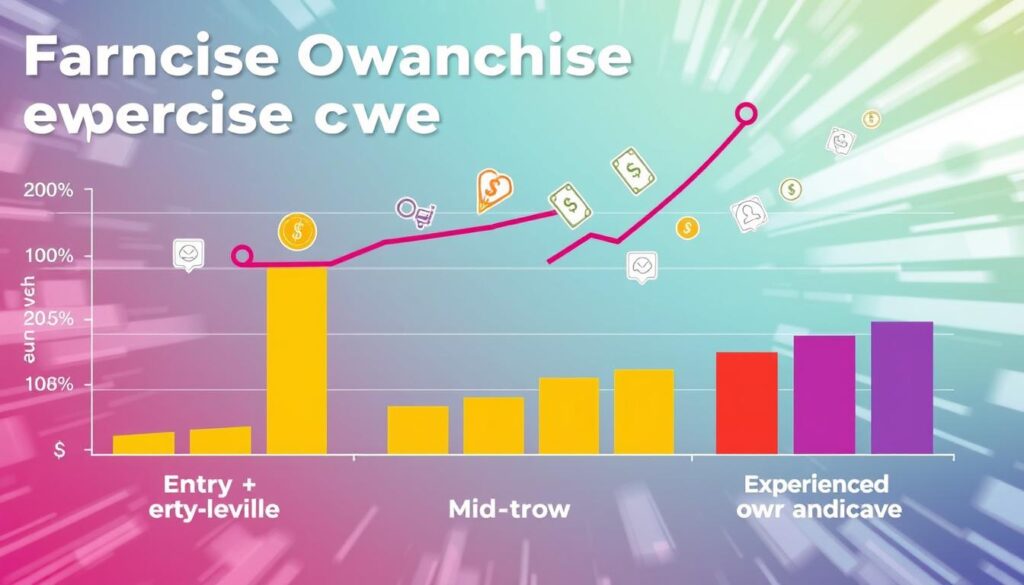
Experience Level Average Annual Earnings
Novice (0-2 years) $49,588
Experienced (2+ years) $115,688
Multi-Unit (2-4 units) $142,638
Multi-Unit (5+ units) $214,418

Experience greatly affects franchise success rates and franchise investment returns. Knowing this can help you plan for financial success.

franchise owner earnings by experience

“The key to unlocking higher earnings as a franchise owner lies in your ability to leverage the system and continuously expand your knowledge and operational expertise.”

How Much Do Franchise Owners Make

As a franchise owner, your earnings can change a lot. It depends on many things. From running one place to many, the money you can make is big. Let’s look at what different types of franchise owners make.

Single Unit Owner Income

On average, single-unit owners make about $102,910 a year. This number is the average for the whole industry. But, how much you make can change based on where you are, how well-known your brand is, and how well you run your business.

Multi-Unit Owner Earnings

Those with more than one unit make more money. Owners of 2-4 units earn about $142,638 a year. And, those with 5 or more units can make up to $204,800 a year.

Industry-Specific Income Ranges

How much money you can make also depends on your industry. For example, senior care franchises make about $155,132 a year. Personal services franchises make $126,070, and pet services franchises make $119,231. But, fast-food franchises usually make around $82,000 a year.

“The average franchise owner’s salary is just over $64,000 annually, but the potential for higher earnings is significant, especially for those who expand into multi-unit operations or specialized industries.”

The franchise owner salary and franchise profitability depend on many things. These include the cost to start, how well you run your business, and what people want. By thinking about these things, you can choose the best way to make more money.

Top-Performing Franchise Industries and Their Income Potential

Are you thinking about starting a franchise? You might wonder which ones can make you the most money. Luckily, many franchise sectors are known for their strong financial performance. This makes them great choices for investors.

Senior care is a top choice, with owners making about $155,132 a year. This industry meets the increasing need for elder services. Business services franchises also do well, with owners earning around $122,394 annually.

Personal services, like coffee shops, are another profitable area. Owners can make about $126,070 a year. The coffee industry is especially strong, with Americans spending nearly $110 billion on coffee in 2022.

Consider sports and recreation franchises, like pickleball, for new opportunities. These have IRRs of 21% to 25%, showing they’re growing fast.

“The most profitable franchises are 66.3% more likely to succeed than the average small business.”

When looking at franchises, think about more than just money. Look at market trends, competition, and your skills. By doing your homework and choosing the right franchise, you can increase your chances of success.

high-profit franchise sectors

Geographic Impact on Franchise Owner Income

The place where a franchise is located can greatly affect how much money its owners make. Places in cities usually have more customers and more people walking by. But, they also have higher costs like rent and paying employees.

Urban vs. Rural Location Earnings

Franchise owners in cities might make more money overall. But, they might not keep as much of it because of the high costs. On the other hand, franchises in rural areas have lower costs. Yet, they might find it harder to get as many customers as city franchises do.

Franchise owners need to think about the market and costs in different places. They should pick the best location for their business.

State-by-State Income Analysis

Looking at franchise owner incomes by state shows big differences. For example, in Minnesota, owners make an average of $119,885 a year. This makes Minnesota one of the top states for earnings.

Other states like New York, New Jersey, and Massachusetts also have high earnings. Owners in these states can make between $65,000 and $75,000 on average.

Regional Market Factors

There are also regional factors that affect franchise profits. These include how many people live in an area, the local economy, and how much competition there is. Franchise owners need to study these factors to choose the best place for their business.

By understanding how location affects earnings, entrepreneurs can make more money. This helps ensure their franchise does well in the long run.

franchise location impact

Initial Investment and Its Relation to Earnings

Starting a franchise can cost a lot, from $518,500 to $761,500. This money goes towards fees, improvements, equipment, and more. But, how much you earn back isn’t always clear.

More money upfront might mean more earnings, but it also means more risk. It’s key to study the Franchise Disclosure Document (FDD) to understand this link.

On average, franchise owners in the U.S. make about $80,000 before taxes each year. Only 7% make over $250,000. Yet, 51% earn less than $50,000. The top 10% make around $62,000, while the bottom 10% make about $39,000.

Earnings can also depend on where you are. For example, in New Jersey, owners make about $75,454. In Rhode Island, it’s $71,089, and in New York, $72,095.

Different industries and franchises have different costs and earnings. It’s vital to research and understand the FDD well to grasp the investment-to-earnings ratio.

franchise startup costs

“The average Maids franchise owner makes about $1.1 million in annual revenue, with the most successful franchise raking in $6.5 million last year.”

For example, Burger King franchises in 2020 made a median of $1,351,000. Owners could make about $175,630 a year. The initial investment ranges from $230,000 to $4,194,700.

When looking at a franchise, consider the initial cost and what you might earn. Do your homework, analyze the industry, and understand the FDD to make a smart choice. This way, you can increase your chances of financial success as a franchise owner.

Understanding Franchise Fees and Royalty Structures

When you’re thinking about becoming a franchise owner, it’s key to know about the fees and royalties. These include an initial fee, ongoing royalties, and marketing contributions. Understanding these costs is vital for planning your finances well.

Ongoing Operational Costs

Franchise owners also face ongoing costs like rent, utilities, and payroll. These expenses can greatly affect your profits. It’s important to include them in your financial plans.

Fee Impact on Net Income

The fees you pay can really affect your net income. Royalties usually range from 4% to 12% of your sales. Knowing the fees of a franchise helps you see if it’s a good investment.

Fee Type Typical Range Example Impact
Initial Franchise Fee $20,000 – $50,000 Can exceed $100,000 for Master Franchise purchases
Marketing Fee Around 2% of monthly revenue $6,000 annually based on $25,000 monthly revenue
Royalty Fee 4% – 12% of gross sales 5% royalty on $1.5 million in revenue = $75,000 annually

Knowing the franchise royalty fees and franchise operational costs helps you see if a franchise is right for you. It lets you make a choice that fits your financial plans.

Multi-Unit Ownership Income Benefits

Expanding your franchise beyond one unit can greatly increase your income. Multi-unit ownership brings many benefits that can significantly boost your earnings. Owners with 2-4 units make about $132,400 a year. Those with 5 or more units can earn up to $204,800 annually.

Key benefits include economies of scale, increased brand recognition, and streamlined operations. By sharing resources, costs per unit go down, leading to higher profits. A larger area and more customers also mean more chances to make money.

But, multi-unit ownership also has its challenges. It requires a lot of money, strong management, and a good team. Franchisors often give more support to multi-unit owners to help the brand grow.

There are at least 43,230 multi-unit franchisees in the U.S. with 227,244 locations. This number is growing. Multi-unit owners make up over 54% of the franchise industry.

Franchise Ownership Average Annual Income
2-4 Units $132,400
5+ Units $204,800

Multi-unit ownership offers great income potential and scaling benefits. It’s a good choice for entrepreneurs wanting to grow their business and earnings. By using multiple locations, owners can achieve financial success and better operations.

multi-unit franchise ownership

Key Factors Affecting Franchise Profitability

Investing in a franchise can be very profitable. But, how much money it makes depends on a few important things. Two big factors are market competition and brand recognition.

Market Competition Analysis

Before choosing a franchise, it’s key to do a deep franchise market analysis. You need to look at how many other businesses are in the area. Also, check if there’s room to grow. If there’s too much competition, it can be hard to keep customers.

Brand Recognition Impact

The strength of a franchise’s brand value is very important. Famous brands like McDonald’s or Subway usually have more customers. This means more money for the franchise.

Also, the franchise’s marketing and advertising support helps a lot. Good marketing can bring in more customers. This can make the franchise more profitable. So, investing in marketing is very important.

franchise market analysis

Franchise success is about more than just one thing. Market competition, brand strength, marketing, and how well the franchisee runs the business all matter. Prospective franchisees need to think about these things carefully. This way, they can make smart choices and do well.

Income Potential in Different Business Service Sectors

If you’re thinking about a business service franchise, you’ll find it very profitable. These franchises make about $122,394 a year. They offer many services like consulting, marketing, and ways to save money.

P3 Cost Analysts is a great example. It helps businesses cut costs. With a model that grows and a big need for cost savings, P3 Cost Analysts can make a lot of money. Since they deal with businesses, they often have more stable income and higher profits than those that sell to consumers.

“The B2B nature of these franchises often leads to more stable income streams and higher profit margins compared to consumer-facing businesses.”

The income from business service franchises can be very good. By using their special skills and a well-known brand, franchise owners can make a lot of money. If you like consulting, marketing, or saving money, this industry is a great chance to start a successful business.

Franchise Average Annual Gross Revenue Initial Investment
P3 Cost Analysts $122,394 $350,000 – $450,000
Wayback Burgers $1,417,443 $350,000 – $450,000
Chick-fil-A $4,160,000 $10,000
McDonald’s $2,815,000 $1,877,600 – $3,283,600
Dunkin’ Donuts $100,000 N/A
Subway $400,000 N/A

business service franchises

Personal Services Franchise Income Analysis

Thinking about a personal services franchise? You’ll find the income potential impressive. These franchises make an average of $126,070 a year. This includes businesses like beauty salons, fitness studios, and cleaning services.

More people want these services as their income grows. They look for ways to improve their lives. This demand is a great chance for franchise owners to make money.

But, how much you make can change a lot. It depends on where you are, how much competition you face, and how well you manage your business. Some franchises might make a lot more or less than the average.

To do well, you need to research the market and pick a strong brand. You also need to know how to run and grow your business. With the right approach, you can succeed and earn well from your franchise.

Franchise Sector Average Annual Income
Senior Care $155,132
Real Estate $152,852
Personal Services $126,070
Business Services $122,394
Pet Services $119,231

The table shows the average income in different franchise sectors. It highlights the good earnings in personal service franchises and other lifestyle businesses.

“Owning multiple franchise locations is a proven strategy for generating life-changing income. The key is to choose the right brands, manage them effectively, and scale your operations over time.”

This section shows the big income chances in personal service franchises and lifestyle business income. Knowing the market and how to run a franchise well can lead to success and a good lifestyle.

personal service franchises

Senior Care Franchise Earnings Potential

The senior care franchise industry offers great income potential for its owners. These businesses are among the top earners, with an average annual income of $155,132. This is due to the increasing need for elder care services and the vital role they play.

Market Growth Factors

The senior care franchise market is set for significant growth. This is because of an aging population and the rising need for in-home care and nursing homes. The U.S. population aged 65 and over is expected to double by 2060. This means a 25% growth in jobs for home health and personal care aides from 2020 to 2030.

Revenue Streams

Senior care franchises have various income sources. These include in-home care, nursing homes, senior living relocation services, and specialized healthcare. These services are crucial, leading to high earnings for these franchises. They can make between $1 million and $5 million annually, with an average of $1.5 million to $2.5 million. Successful franchises can also see net profit margins of 10% to 15%, resulting in average net profits of $150,000 to $375,000 annually.

The senior care franchise industry is growing fast and is essential. This makes it a great investment for entrepreneurs looking for senior care franchise profits and stable healthcare franchise income.

Maximizing Franchise Owner Income

As a franchise owner, making more money is key to your business’s success. Use smart cost control, local marketing, and top-notch customer service. This way, you can boost your profits and grow your business.


Streamlining your inventory is a smart move. Keep an eye on your stock and cut down on waste. This can lower your costs and increase your earnings. Also, using energy-saving tech like LED lights can cut down on utility bills.

Upselling and cross-selling are great ways to make more money. Teach your team to suggest extra products or services. This can make customers happier and increase your sales. Also, investing in your team’s growth can make your franchise more profitable.

Always keep learning and stay up-to-date with market trends. This is crucial for keeping your franchise profit optimization and franchise business growth going strong. Keep an eye on your competitors and adjust your plans as needed.

“The secret to my success? I never stop learning. I’m constantly adapting my business model to meet the changing needs of my customers and the market.”
– Successful Franchise Owner

By using these strategies, you can increase your income as a franchise owner. This will help your business grow and thrive in the long run.

Financial Performance Metrics for Success

As a franchise owner, it’s key to watch your finances closely for success. Important metrics include franchise financial KPIs like gross sales, net profit margins, and return on investment (ROI). Also, keep an eye on customer acquisition costs.


A profit margin of 10% to 20% is often seen as healthy for franchises. Regularly analyzing your finances and franchise performance tracking against benchmarks can show where to improve. It can also reveal new growth chances.

Metric Description Benchmark
Gross Sales Total revenue before expenses Varies by industry
Net Profit Margin Revenue left after all expenses 10% to 20%
Customer Acquisition Cost Cost of getting a new customer Varies by industry
Return on Investment (ROI) Profitability compared to investment Varies by industry

Tracking these franchise financial KPIs and franchise performance tracking metrics helps owners make smart choices. This can lead to better operations, higher profits, and lasting success.

“Many emerging franchisors and established brands struggle to collect all the required data from franchisees as per franchise agreements, as highlighted by Michael Iannuzzi from Citrin Cooperman.”

It’s vital for franchise owners to regularly analyze their finances and compare them to industry standards. This helps them fully understand their business’s performance. It also shows where they can get better.

Conclusion

Franchise ownership can lead to big profits, with earnings from $102,910 to over $200,000 for those with many units. Success depends on many things like the industry, location, and management skills. It also requires following the franchise’s rules closely.

Starting a franchise comes with costs and fees, but it offers a tested business plan and support. This can help you succeed.

Thinking about getting into franchising? It’s important to do your homework and have realistic hopes. The franchise world offers a chance to own a business with help and a known brand.

Knowing how much money you can make and what it takes to succeed is key. This way, you can decide if franchising fits your business dreams and financial goals.

Franchise ownership can be a good way to make money, but you need to think carefully. Look at the franchise, your skills, and the market. With the right approach, you can build a successful and profitable business.

White Collar Recession: What You Need to Know Today

The white-collar recession is hitting hard on professionals in many fields, especially in middle and upper management. Intellizence reports over 500 companies have laid off workers and restructured since early 2024. This shows a big change in the job market.

This recession is different because it mainly affects white-collar workers. It leads to job losses, salary freezes, and no bonuses. Companies are trying to save money and adjust to the market’s changes.

Key Takeaways:

  • The white-collar recession is a widespread trend affecting professionals in middle and high-management roles.
  • Layoffs and restructuring have been reported across multiple industries, including tech, finance, and consulting.
  • Companies are implementing cost-cutting measures such as job losses, salary freezes, and bonus holds.
  • Younger workers are showing increased interest in transitioning from the public sector to the private sector due to anticipated layoffs.
  • The recession is having a significant impact on the job market, with tech jobs among the hardest hit sectors.

Understanding the White Collar Recession

The economy is facing a downturn, known as the “white-collar recession.” It’s causing big job losses and layoffs in the professional and managerial fields. This recession is different because it mainly hits high-earning, white-collar workers, not the usual blue-collar jobs.

Key Characteristics of Professional Job Losses

The corporate downsizing in this recession mainly hits tech, finance, and consulting. These fields see a lot of professional job cuts because of automation, outsourcing, and cost-cutting efforts by companies.

Impact on Middle and Upper Management

The white-collar recession is hard on middle and upper management jobs. Many companies are cutting these roles to save money. They see these jobs as less essential to their main business.

Current Economic Indicators

The unemployment rate in professional and business services has gone up. It was 3.1% in January 2024 and 4.0% by mid-year. This shows the tough times white-collar workers are facing due to the recession.

white collar recession

“The white-collar recession is a stark reminder that no job is truly immune to the economic cycles. Even the most skilled and experienced professionals are facing unprecedented challenges in the current job market.”

The Shifting Landscape of Corporate Employment

The corporate job world is changing fast. Big companies in many fields are cutting jobs and freezing hiring. Firms like Deloitte, Ernst & Young, KPMG, and PwC have lost over 9,000 jobs. Smaller companies like Slalom and West Monroe have also cut 7% to 13% of their staff.

These changes aren’t just in consulting. Tech giants like Google, Meta, and Amazon have also laid off thousands. They’re adjusting to a new economy that values automation and efficiency. Banks like Goldman Sachs, Citigroup, and Wells Fargo have also cut jobs to save money.

The job market isn’t just changing in tech and finance. Companies like Tesla, Dow, and Nike have also cut jobs. They’re adjusting to a new economic reality.

Sector Job Cuts
Consulting Over 9,000 jobs lost
Technology Thousands of jobs lost across major tech firms
Finance Thousands of jobs lost at major financial institutions
Manufacturing and Consumer Products Hundreds to thousands of jobs lost at various companies

These changes show a big shift in the job world. They’re caused by many things, like the post-pandemic economy and the need for new skills.

Corporate Employment Landscape

“The corporate employment landscape is undergoing a significant transformation, with major firms across various industries implementing workforce reduction and hiring freezes in response to the evolving job market changes.”

Major Industries Affected by Professional Job Cuts

The white-collar recession has hit many industries hard. Tech giants like Google, Meta, Amazon, and Microsoft have cut thousands of jobs. Financial services firms, including Goldman Sachs, Citigroup, and Wells Fargo, have also reduced their workforce.

In the consulting world, Accenture has laid off 19,000 employees, mostly in admin roles. Smaller firms like Slalom and West Monroe have cut 7% to 13% of their teams.

These job cuts have shaken the professional job market. Over 500 companies have laid off workers since early 2024, Intellizence reports. More experienced and higher-earning employees are being let go.

Technology Sector Layoffs

The tech industry has seen the most job cuts. In 2022, 1,064 tech companies laid off 165,000 workers. The next year, 1,193 companies cut 264,000 jobs. In 2024, 449 companies laid off 138,000 workers.

Financial Services Impact

The financial sector has also felt the recession’s effects. Firms like Goldman Sachs, Citigroup, and Wells Fargo have cut jobs. These cuts are part of restructuring and cost-cutting efforts.

Consulting Industry Changes

The consulting industry has also seen job cuts. Accenture cut 19,000 jobs, mostly in admin roles. Smaller firms like Slalom and West Monroe have cut 7% to 13% of their teams.

tech layoffs

These job cuts have shaken the professional job market. White-collar workers face uncertainty and must adapt to the changing economy.

Causes Behind the Current Job Market Downturn

The job market is going through big changes, affecting many areas and jobs. This change comes from several reasons, like the economic uncertainty after the pandemic, companies restructuring, and cutting costs.

High inflation, changing interest rates, and global events like elections and wars have made companies cautious. Economic uncertainty has led to a slowdown in hiring white-collar workers. Companies are now focusing on making their operations more efficient.

Corporate restructuring has also played a big role. Businesses want to work better and faster, so they’re making their teams more efficient. This means cutting jobs and making management structures flatter, reducing white-collar jobs.

Also, cost-cutting measures are a top priority for companies in uncertain times. They’re not filling empty positions, which could lead to losing valuable talent and knowledge. In fields like tech, finance, and consulting, the impact is especially big.

“The decline of 818,000 jobs in an economy of 158 million might not seem significant, although it indicates a trend in white-collar job market downturn.”

While the job market downturn might seem like a short-term issue, some think it could show deeper changes in the economy. The rise of remote work, AI, and digital changes in industries could lead to a big shift in jobs.

corporate restructuring

As companies adjust to these changes, professionals need to get ready for the new job market. They should find ways to stay strong in their careers and stay employable.

Automation and AI’s Role in Professional Job Displacement

Automation and artificial intelligence (AI) are changing the job market fast. As technology gets better, many jobs that people used to do are now done by machines. This is causing job losses in many fields.

Technology’s Impact on Traditional Roles

Automation and AI are changing how businesses work, often by replacing people. Companies are spending a lot on these technologies to make things more efficient. For example, big tech companies are using their money to improve AI, not to hire more people.

This change is big for jobs that people used to do. AI can now do things like analyze data, write reports, and even help with customer service. It does these tasks quickly and accurately, saving companies money.

Emerging AI-Driven Changes

New AI technologies, like ChatGPT, are making things even faster. ChatGPT quickly became popular, with 100 million users in just two months. This is faster than apps like TikTok and Instagram.

AI is changing the job market a lot. A Goldman Sachs report says 300 million jobs could be changed by AI like ChatGPT in the next ten years. Most of these jobs are high-paying ones, unlike the jobs lost during the Great Recession.

Statistic Value
Percentage of U.S. companies that have adopted some form of AI 25%
Percentage of Chinese and Indian companies that have adopted AI 60%
Estimated number of jobs that could be affected by AI advances in the next decade 300 million
Amount of funding raised by AI-related startups in the first half of 2023 $25 billion

The fast growth of automation and AI is changing the job market. This leads to job losses and the need for workers to learn new skills. The job market is being reshaped by technological advancement in many industries.

automation and AI

“An estimated 300 million jobs worldwide could be affected over the next decade by tech advances driven by generative AI such as ChatGPT.”

Corporate Cost-Cutting Strategies

Companies are now more focused on cutting costs, improving efficiency, and managing their budgets better. With higher interest rates, careful consumer spending, and slower growth, many firms are looking at their workforce differently. They are searching for ways to save money.

One common tactic is layoffs, especially for white-collar workers in tech, finance, and consulting. Firms are also freezing hiring and setting salary limits to keep their budgets in check.

Companies are also checking if certain jobs can be done by new graduates, offshore workers, or automated systems at lower costs. In some cases, they’ve even created fake job listings to trick investors, gather data, and make current employees feel like they could be replaced.

“Many leaders have postponed major decisions on hiring, mergers, reorganizations, and strategic moves due to economic uncertainty.”

These cost-cutting strategies show the tough times companies face today. Growth is harder to find, and keeping an eye on profits is key. As the economy stays uncertain, leaders must make choices that balance saving money now with keeping the business strong in the future.

corporate cost-cutting strategies

Experts warn that waiting too long to make decisions can hurt morale among executives and employees. They urge leaders to make quick, smart choices. By being proactive and flexible, companies can get through tough times and be ready for better days ahead.

Contrasting Blue-Collar and White-Collar Employment Trends

The white-collar world is worried about a recession. But, the blue-collar sector is doing well. It has strong demand and low unemployment in areas like manufacturing, construction, and logistics.

Employment Rate Disparities

The Bureau of Labor Statistics shows blue-collar jobs like construction and manufacturing have low unemployment. They are around 3.5% and 3.7% respectively. This is much lower than the national average.

On the other hand, hiring for high-income jobs has slowed down a lot. It’s the worst since 2014, except for the early days of the pandemic.

Sector-Specific Analysis

The US economy has changed a lot. It went from being very weak to very tight in just ten years. Blue-collar jobs are harder to fill than white-collar ones.

More people from groups like black workers and young Hispanic women are joining the workforce. This is a big improvement.

Sector Unemployment Rate Job Growth Trend
Construction 3.5% Steady
Manufacturing 3.7% Increasing
Logistics 4.2% Steady
White-Collar (over $96K) N/A Slowing dramatically

This shows how the US labor market is changing. Blue-collar jobs are doing well, but white-collar jobs are struggling with the recession.

Impact on Professional Career Growth

The white-collar recession is changing how we think about career advancement and professional development. It’s harder to move up in your job, and many feel stuck. Also, the idea of job security is no longer a given for white-collar workers.

Recent data shows a worrying trend. Goldman Sachs Research says there’s a 65% chance of an economic downturn in the U.S. in the next year. LinkedIn’s report shows a 23% drop in hiring for white-collar jobs in January.

This downturn is clear, with more people talking about layoffs and job losses on LinkedIn. There’s also a 20% rise in posts about looking for new work. The number of job openings compared to applicants has dropped, showing a slowdown in hiring.

career growth

The tech industry has been especially hard hit, with over 110,000 white-collar jobs lost in 2023. Big names like Ericsson, NPR, and McKinsey are also cutting jobs, with McKinsey planning to lay off about 2,000 people.

But there’s a glimmer of hope. Even though jobs are tough to find, salaries for tech experts are still high. For example, a Meta employee’s median income was nearly $300,000 in 2021. The U.S. economy added 517,000 jobs in January, with many in the leisure and hospitality sector.

In this changing world, people are looking at their careers differently. They’re learning new skills to stay relevant. Moving within a company is becoming a smart move, offering valuable experience and job security.

Key Insights Implications
65% probability of an economic downturn in the U.S. within 12 months Increased job insecurity and limited career advancement opportunities for white-collar professionals
23% decrease in hiring activities for white-collar professionals Highly competitive job market, requiring professionals to adapt and acquire new skills
Spike in LinkedIn posts mentioning “layoff” or “retrenchment” Heightened sense of uncertainty and the need for proactive career planning
Internal mobility as a strategic approach for job security and growth Opportunities for professionals to gain new experiences and enhance their value to the organization

As the white-collar recession goes on, professionals need to stay strong and adaptable. Focusing on career development and job security is key. By moving within their companies and learning new skills, they can thrive in this changing world.

Financial Planning During Employment Uncertainty

Today, the economy faces a lot of uncertainty, making financial planning key for professionals. The “white-collar recession” has hit tech, finance, and consulting hard. People need to act fast to protect their money and get ready for job market changes.

Emergency Fund Strategies

Creating a strong emergency fund is a smart first move. Aim to save 3 to 6 months’ worth of living costs. This fund helps cover basic needs like rent, utilities, and food, keeping you safe without touching your long-term savings.

Investment Considerations

It’s also important to check your investment plans. Make sure your money is spread out and not all in one place. A mix of stocks, bonds, real estate, and other investments can help you stay safe when jobs are scarce.

By saving for emergencies and diversifying your investments, you can keep your finances strong. This way, you’re ready for whatever the job market throws your way.

financial planning

“The key to weathering economic storms is to have a robust financial plan that prioritizes both short-term liquidity and long-term resilience.”

Financial Planning Strategies Benefits
Emergency Fund Provides a safety net for essential expenses during job loss or income reduction
Diversified Investment Portfolio Mitigates risks associated with job market volatility and economic downturns
Exploring Alternative Income Sources Supplements primary income and strengthens financial security

Skills Development for Job Security

In today’s economy, keeping your job is a big concern for many. To stay safe, upskilling, reskilling, and ongoing professional development are key. By learning new skills, you become a vital part of your team.

Look into skills that match new tech trends. Automation and AI are changing jobs, so staying updated is crucial. Also, improving your leadership skills, like communication and decision-making, makes you more valuable to employers.

Being flexible and open to new career paths is vital in uncertain times. Research shows job seekers seen as optimistic are 25% more likely to find a job. Showing you’re ready to adapt and learn shows your flexibility and adaptability.

Think about contract or freelance work too. It offers varied experiences and a broader skill set. Almost 70% of managers value soft skills like communication and teamwork when hiring. Seeking these opportunities boosts your job prospects and makes you more resilient.

In short, the way to keep your job in tough times is to keep learning and growing. By always looking to improve and take on new challenges, you become a key player in the changing job market.

upskilling

Navigating the Current Job Market

The job market is always changing. To succeed, you need a smart and active plan. Whether you’re looking for a new job or wanting to grow in your career, staying ahead is key.

Resume Enhancement Tips

Make your resume stand out by showing you can adapt and have many skills. Talk about your ability to handle change and your eagerness to try new things. Highlight your successes and how they add value to a company.

Network Building Strategies

Networking is vital today. Connect with people in your field, go to events, and join professional groups. These connections can give you insights, tips, and job leads. A strong network can really help you in your job search.

Be careful of “ghost jobs” that don’t really exist. Keep trying and don’t give up, even when it’s tough. Use job sites, reach out to people, and keep up with new trends in your field.

Statistic Value
Nationwide Unemployment Rate (March 2023) 3.5%
Median Income for Bachelor’s Degree Holders $101,400
Drop in Job Postings 36%
Conversion Rate for White-Collar Talent Outreach 15 phone screens out of 300 outreach attempts
Quit Rate (Lowest since 2015) 1.9%

By using these tips and keeping up with market trends, you can confidently navigate your job search. This will help you succeed.

“The job market is described as a ‘workers’ labor market,’ indicating that job seekers may still have power and opportunities available.”

Future Outlook for Professional Employment

The white-collar recession is making the job market uncertain. Some think it’s just a short-term issue. Others believe it could lead to big changes in the economy, affecting jobs for a long time.

Remote work, automation, and digital changes will shape the future job scene. Professionals might need to be flexible, have diverse skills, and work well with new tech.

The US unemployment rate hit 4.3% in July, the highest since October 2021, the Bureau of Labor Statistics said. Job growth slowed down, falling from 215,000 to 175,000 new jobs each month.

White-collar workers might face more job insecurity or longer job hunts. There could be fewer jobs or more competition. Employers might look for people with specific skills or experience that fits their business plans or tech needs.

Economic uncertainty, like presidential elections and global tensions, could make things harder for white-collar jobs. As the job market predictions and future workforce trends change, professionals need to stay flexible and keep improving their careers.

Some areas, like healthcare and government, are still hiring. But tech and finance have seen big layoffs. The future for high-level jobs in banking, real estate, and entertainment is still unclear. It might take time to see how these job cuts affect the job market.

As the job world keeps changing, people need to work on their skills, build strong networks, and adapt to new work styles. This will help them stay ahead in the job market and secure their future employment.

Adapting to the New Professional Landscape

In today’s changing job world, career adaptation, workplace flexibility, and skill diversification are key. The job market is shifting due to new tech, economic changes, and different consumer needs. People need to be ready to change their careers and find new opportunities.

Adopting workplace flexibility can really help. This could mean working from home or in new work setups. It helps balance work and life and lets people find jobs that fit their skills and goals better.

Also, skill diversification is vital to stay ahead. Learning new things, especially about tech and data, makes you more versatile. The World Economic Forum says 40% of job skills will change in five years. This shows how important it is to keep learning.

The job world for white-collar workers is changing fast. This change shows that career adaptation is now a must, not just a choice. By being open to change, growing your network, and being resilient, you can succeed in today’s job market.

“The biggest risk is not taking any risk… In a world that’s changing really quickly, the only strategy that is guaranteed to fail is not taking risks.” – Mark Zuckerberg

With big companies like Meta and Google cutting jobs, the need for skill diversification and being adaptable is clear. Services like LAK Group help people make smooth career changes. They offer support to help you move forward with confidence.

In short, the job world for white-collar workers is changing fast. To succeed, you need to be proactive and adaptable. By embracing workplace flexibility, skill diversification, and a mindset of career adaptation, you can thrive in the changing job market. You’ll come out stronger than ever.

Conclusion

The white collar recession is changing the job market, especially in tech, finance, and management. It affects about 18% of workers making over $100,000. This shift brings big changes to how companies work and hire.

As the job market changes, it’s key for professionals to stay alert and ready. They need to keep learning, network, and stay financially stable. These steps help you get through tough times and find new chances.

The future of white-collar jobs might see more automation and AI. Workers will need to keep learning and adapting to stay relevant. By staying informed and embracing change, you can come out of this recession stronger and ready for what’s next.

Understanding the Dynamics: Government and Business Roles in Investment Strategies


How do government policies and business decisions shape investment strategies? This article explores the dynamic relationship between government and business in the investment landscape. We’ll examine the government’s influence on investment strategies, business roles in investment planning, and their collaborative initiatives. By understanding these dynamics, readers will gain insights into effective investment approaches, shareholder value creation, and community development. Whether you’re an investor, business owner, or policymaker, this guide will help you navigate the complex interplay of government and business in the investment world.

Key Takeaways

  • Government policies significantly influence investment strategies through fiscal, monetary, and regulatory measures
  • Public-private partnerships leverage strengths of both sectors to address complex challenges and drive innovation
  • Sustainable and ethical investing practices are becoming priorities for governments and businesses
  • Technology is transforming investment landscapes, enabling sophisticated risk assessment and new investment opportunities
  • Adapting to economic shifts requires proactive strategies and flexible investment approaches from both sectors

Understanding the Government’s Influence on Investment Strategies

an investor in a modern office, analyzing charts and graphs while government policy documents lay scattered on the desk, illustrating the influence of policymaking on investment strategies.

Government policies significantly shape investment strategies, influencing asset management and risk. This section explores how policymaking affects the investment climate, government incentives, regulatory compliance, and macroeconomic policies. Understanding these factors is crucial for investors navigating the bond market and managing price fluctuations in various asset classes.

Policy Making and Its Effect on Investment Climate

Government policy decisions significantly shape the investment climate, influencing how businesses and investors manage their assets and research opportunities. Effective policymaking can enable a more stable environment for investment, encouraging economic growth and innovation. Data-driven policies that support research and development often lead to increased investor confidence and enhanced market opportunities.

Policy AreaImpact on Investment Climate
Fiscal PolicyAffects tax rates and government spending
Monetary PolicyInfluences interest rates and inflation
Regulatory PolicyDetermines business rules and compliance costs
Trade PolicyImpacts international market access

Government Incentives and Support Programs

Government incentives and support programs play a crucial role in shaping investment strategies across various sectors. These initiatives often target key areas such as education, health, and trade, aiming to stimulate economic growth and improve governance structures. Organizations benefit from these programs through tax breaks, grants, and subsidies, which can significantly influence their investment decisions and operational strategies.

Regulatory Environment and Compliance Requirements

The regulatory environment and compliance requirements significantly impact investment strategies and economic growth. Businesses must navigate complex regulations, conduct regular audits, and adapt their strategies to comply with evolving legal frameworks. These requirements shape asset allocation decisions and influence overall economic performance. Effective compliance management can mitigate risks and enhance investor confidence, contributing to long-term economic stability:

Regulatory AspectImpact on Investment
Financial ReportingEnhances transparency and investor trust
Environmental RegulationsInfluences sustainable investment choices
Data Protection LawsAffects technology investments and strategies
Labor LawsImpacts workforce planning and costs

Macroeconomic Policies Influencing Investment

Macroeconomic policies in the United States significantly influence investment strategies by shaping the economic climate. These policies, which include fiscal and monetary measures, impact key economic indicators such as inflation, interest rates, and GDP growth. Investors closely monitor these factors to make informed decisions about asset allocation and risk management in various sectors of the economy. Understanding the interplay between government policies and market dynamics is crucial for developing effective investment strategies in an ever-changing economic landscape.

Exploring Business Roles in Investment Planning

a diverse group of professionals discussing investment strategies in a modern boardroom setting with charts and graphs displayed on a large screen.

Businesses play a crucial role in investment planning, balancing strategic objectives with risk management. This section explores how companies shape their investment strategies, focusing on sustainability, regulation compliance, and greenhouse gas emissions reduction. It examines financial planning, capital allocation, and innovation strategies that drive market expansion and employment growth.

Strategic Objectives Guiding Business Investments

Strategic objectives serve as the cornerstone of business investments, guiding companies in their financial decisions and property acquisitions. These objectives often focus on sustainable development, balancing short-term gains with long-term stability. Companies increasingly incorporate pension considerations and sustainable practices into their investment strategies, aligning financial growth with environmental and social responsibilities. By prioritizing sustainable development, businesses can enhance their market position while contributing to broader societal goals.

Risk Assessment and Management in Corporate Decisions

Risk assessment and management play a crucial role in corporate investment decisions. Companies evaluate potential risks associated with investments, considering factors such as market volatility, regulatory changes, and economic uncertainties. This process involves analyzing data, conducting scenario planning, and implementing risk mitigation strategies to protect assets and ensure long-term financial stability. Effective risk management enables businesses to make informed decisions, balancing potential rewards with acceptable levels of risk exposure.

Financial Planning and Capital Allocation

Financial planning and capital allocation are critical components of business investment strategies. Companies analyze market trends, assess risks, and align their financial resources with strategic objectives to optimize returns. Effective capital allocation involves prioritizing investments across various business units, projects, and initiatives to maximize shareholder value and sustain long-term growth. This process requires careful consideration of factors such as expected returns, risk profiles, and alignment with overall business goals:

Capital Allocation StrategyKey Considerations
Organic GrowthMarket expansion, R&D investment
Mergers and AcquisitionsSynergies, integration costs
Debt RepaymentInterest savings, credit rating impact
Share RepurchasesStock price, earnings per share

Innovation and Market Expansion Strategies

Innovation and market expansion strategies drive business growth and competitiveness. Companies invest in research and development to create new products, services, and technologies that address evolving market needs. Market expansion strategies involve entering new geographic regions or customer segments, often requiring significant capital investment and risk assessment. Successful innovation and expansion strategies can lead to increased market share, revenue growth, and improved profitability. Key elements of these strategies include:

  • Continuous product development and improvement
  • Investment in emerging technologies
  • Strategic partnerships and collaborations
  • Market research and customer insights
  • Adaptable business models

The Interplay Between Government Policies and Business Investments

a bustling city skyline with skyscrapers representing different industries, intertwined with roads symbolizing the interconnected relationship between government policies and business investments.

Government policies and business investments are deeply interconnected, shaping economic landscapes and investment strategies. This section examines how taxation affects investment choices, trade agreements create global opportunities, environmental regulations drive sustainable investments, and government grants support business growth. Understanding these dynamics is crucial for effective investment planning and decision-making.

Taxation and Its Impact on Investment Choices

Taxation policies significantly influence investment choices, shaping business strategies and economic growth. Corporate tax rates, capital gains taxes, and investment incentives directly affect the attractiveness of various investment opportunities. Governments use taxation as a tool to encourage specific types of investments, such as research and development or renewable energy projects. The impact of taxation on investment decisions varies across industries and company sizes:

Tax PolicyImpact on Investment
Corporate Tax RateAffects after-tax profits and reinvestment capacity
Capital Gains TaxInfluences investor behavior and asset allocation
R&D Tax CreditsEncourages innovation and technology investments
Depreciation AllowancesImpacts capital expenditure decisions

Trade Agreements and Global Investment Opportunities

Trade agreements significantly influence global investment opportunities by shaping cross-border business activities and market access. These agreements reduce trade barriers, harmonize regulations, and protect intellectual property rights, creating a more favorable environment for international investments. As a result, businesses can expand into new markets, diversify their portfolios, and capitalize on comparative advantages in different countries. The impact of trade agreements on investment flows varies across sectors, with industries such as manufacturing, technology, and services often benefiting the most from enhanced global market integration.

Environmental Regulations Driving Sustainable Investments

Environmental regulations drive sustainable investments by creating incentives and requirements for businesses to adopt eco-friendly practices. These regulations, such as carbon pricing and emission standards, prompt companies to invest in clean technologies, renewable energy sources, and sustainable supply chains. As a result, businesses align their investment strategies with environmental goals, leading to increased funding for green projects and the development of innovative, sustainable solutions:

Environmental RegulationImpact on Sustainable Investments
Carbon PricingEncourages investment in low-carbon technologies
Emission StandardsDrives innovation in clean energy solutions
Waste Management LawsPromotes circular economy investments
Energy Efficiency MandatesSpurs investments in smart building technologies

Government Grants and Funding for Business Growth

Government grants and funding programs play a crucial role in fostering business growth and innovation. These initiatives provide financial support to enterprises, particularly small and medium-sized businesses, enabling them to invest in research and development, expand operations, and create jobs. By strategically allocating funds to high-potential sectors and regions, governments stimulate economic growth and enhance competitiveness. The effectiveness of these programs often depends on their alignment with broader economic policies and the ability to address specific market gaps or failures:

  • Research and development grants
  • Small business innovation research programs
  • Export development funding
  • Regional economic development initiatives
  • Green technology and sustainability grants

Which Best Describes the Role That Government and Business Play in Investments?

a group of government officials and business executives engaged in a thoughtful discussion around a table filled with investment-related documents and charts.

Government and business play distinct yet interconnected roles in shaping investment strategies. This section examines key factors characterizing government involvement, defining features of business investment approaches, and provides a comparative analysis of their roles and objectives. By synthesizing these roles, readers will gain a comprehensive understanding of how government policies and business decisions influence investment landscapes.

Key Factors Characterizing Government Involvement

Government involvement in investments is characterized by several key factors that shape the economic landscape. Policymakers use fiscal and monetary tools to influence investment behavior, such as adjusting interest rates, implementing tax incentives, and creating regulatory frameworks. These actions aim to stimulate economic growth, maintain stability, and address societal needs. Additionally, governments often provide direct support through grants, subsidies, and public-private partnerships to encourage investments in strategic sectors or underserved areas.

Defining Features of Business Investment Approaches

Business investment approaches are characterized by profit-driven decision-making, risk assessment, and strategic planning. Companies evaluate potential returns, market conditions, and competitive landscapes to allocate resources effectively. They often focus on short-term gains and long-term growth, balancing shareholder interests with sustainability considerations. Business investments typically target areas that enhance operational efficiency, expand market share, or develop new products and services.

Comparative Analysis of Their Roles and Objectives

Government and business roles in investments differ in their objectives and approaches. Governments aim to create a stable economic environment, promote social welfare, and address market failures through policies and regulations. Businesses focus on maximizing returns, expanding market share, and creating shareholder value. While governments use fiscal and monetary tools to influence broader economic conditions, businesses make targeted investments based on market analysis and profit potential. The interplay between these roles shapes the overall investment landscape:

AspectGovernment RoleBusiness Role
Primary ObjectiveEconomic stability and growthProfit maximization
Investment ApproachPolicy-driven, long-term focusMarket-driven, strategic planning
Risk ManagementSystemic risk mitigationCompany-specific risk assessment
Impact ScopeBroad economic influenceIndustry or sector-specific impact

Synthesizing the Roles for a Comprehensive Understanding

The roles of government and business in investments form a complex ecosystem where public policies and private strategies intersect. Governments establish the regulatory framework and economic conditions that shape investment opportunities, while businesses make strategic decisions within this environment to maximize returns and growth. This interplay creates a dynamic investment landscape where public objectives and private interests coexist and often complement each other. Key aspects of this synthesis include:

  • Policy alignment with market trends
  • Public-private partnerships for infrastructure development
  • Regulatory adaptations to support innovation
  • Corporate social responsibility initiatives aligned with government goals
  • Economic incentives driving business investment decisions

Collaborative Initiatives Between Government and Business

a diverse group of government officials and business executives shaking hands in a modern boardroom, discussing strategic partnerships for economic growth and innovation.

Collaborative initiatives between government and business foster economic growth and innovation. This section explores public-private partnerships, joint ventures in infrastructure, shared innovation in research, and successful case studies. These collaborations leverage public resources and private expertise to address complex challenges and drive investment in key sectors.

Public-Private Partnerships and Their Benefits

Public-private partnerships (PPPs) offer significant benefits for both government and business sectors in investment strategies. These collaborations leverage the strengths of each partner, combining public resources and policy support with private sector expertise and efficiency. PPPs enable the development of large-scale infrastructure projects, innovative public services, and research initiatives that might otherwise be challenging for either sector to undertake alone. The benefits of PPPs include risk sharing, improved project delivery, access to private sector innovation, and enhanced public service quality:

PPP BenefitGovernment AdvantageBusiness Advantage
Risk SharingReduced financial burdenAccess to stable, long-term projects
Improved EfficiencyCost-effective service deliveryStreamlined operations
InnovationAccess to private sector expertiseNew market opportunities
Resource OptimizationLeveraged private capitalPublic sector support and resources

Joint Ventures in Infrastructure and Development Projects

Joint ventures in infrastructure and development projects combine government resources with private sector expertise to address complex urban challenges. These partnerships enable large-scale initiatives such as transportation networks, energy systems, and urban redevelopment. By sharing risks and rewards, joint ventures accelerate project completion and enhance efficiency in public service delivery. This collaborative approach often results in innovative solutions that benefit communities while providing attractive investment opportunities for businesses.

Shared Innovation in Research and Development

Shared innovation in research and development (R&D) represents a powerful collaboration between government and business sectors. These partnerships leverage public funding and private expertise to drive technological advancements and economic growth. By combining resources, shared R&D initiatives accelerate innovation in critical areas such as healthcare, renewable energy, and advanced manufacturing. This collaborative approach often leads to breakthrough discoveries and commercially viable products, benefiting both public interests and private sector competitiveness:

  • Government research grants supporting private sector innovation
  • Joint research facilities and laboratories
  • Technology transfer programs between universities and industries
  • Collaborative research projects addressing national priorities
  • Public-private consortia for large-scale scientific endeavors

Case Studies Highlighting Successful Collaborations

Case studies of successful government-business collaborations demonstrate the potential for innovative solutions to complex challenges. The Human Genome Project, a joint effort between public institutions and private companies, exemplifies how shared resources and expertise can accelerate scientific discovery. Similarly, the development of COVID-19 vaccines through Operation Warp Speed showcases how public funding and regulatory support can expedite private sector innovation in critical areas. These examples highlight the synergies achieved when government and business align their objectives, resulting in significant advancements that benefit society and drive economic growth.

Future Outlook on Government and Business Investment Dynamics

a futuristic city skyline showcasing sustainable technologies and innovative infrastructure projects, symbolizing the evolving government and business investment dynamics influenced by emerging trends and technological advancements.

The future of government and business investment dynamics is shaped by emerging trends, technological advancements, economic shifts, and sustainable practices. This section examines how these factors influence investment strategies, exploring the role of technology, preparation for policy changes, and the growing importance of ethical investing. Understanding these dynamics is crucial for adapting to evolving investment landscapes.

Emerging Trends Shaping Investment Strategies

Emerging trends are reshaping investment strategies for both governments and businesses. The rise of sustainable investing, driven by environmental concerns and social responsibility, is influencing policy decisions and corporate priorities. Technological advancements, particularly in artificial intelligence and blockchain, are creating new investment opportunities and transforming traditional sectors. Geopolitical shifts and changing demographic patterns are also altering investment landscapes, prompting governments and businesses to reassess their long-term strategies and risk management approaches.

The Role of Technology in Evolving Investment Landscapes

Technology plays a transformative role in shaping investment landscapes for both governments and businesses. Advanced analytics and artificial intelligence enable more sophisticated risk assessment and decision-making processes. Blockchain technology enhances transparency and security in financial transactions, potentially revolutionizing investment tracking and regulatory compliance. The rise of fintech platforms democratizes access to investment opportunities, challenging traditional financial institutions and regulatory frameworks. These technological advancements create new investment sectors, alter existing market dynamics, and require governments and businesses to adapt their strategies accordingly:

  • AI-driven predictive analytics for market trends
  • Blockchain applications in investment tracking
  • Fintech platforms expanding investment access
  • Cybersecurity investments to protect digital assets
  • Smart contract technology streamlining transactions

Preparing for Economic Shifts and Policy Changes

Preparing for economic shifts and policy changes requires proactive strategies from both governments and businesses. Organizations must develop flexible investment approaches that can adapt to evolving regulatory environments and market conditions. This involves scenario planning, diversifying investment portfolios, and maintaining strong financial reserves. Governments, in turn, need to provide clear communication about upcoming policy changes and offer transition periods to help businesses adjust their investment strategies. By fostering open dialogue and collaboration, both sectors can better navigate uncertainties and capitalize on emerging opportunities in a rapidly changing economic landscape.

Fostering Sustainable and Ethical Investment Practices

Fostering sustainable and ethical investment practices has become a priority for both governments and businesses in shaping future investment strategies. Governments are implementing regulations and incentives to promote environmental, social, and governance (ESG) criteria in investment decisions. Simultaneously, businesses are integrating sustainability goals into their core strategies, recognizing the long-term value and risk mitigation benefits of ethical investing. This shift towards responsible investment practices is driven by increasing stakeholder pressure, climate change concerns, and the recognition that sustainable businesses often outperform their peers in the long run.

Conclusion

Understanding the dynamics between government and business roles in investment strategies is crucial for navigating the complex economic landscape. Government policies shape the investment climate through regulations, incentives, and macroeconomic measures, while businesses drive innovation and growth through strategic capital allocation and risk management. The interplay between these sectors creates opportunities for collaborative initiatives, such as public-private partnerships and joint research ventures, which can address societal challenges and foster economic development. As emerging trends and technologies continue to reshape investment landscapes, both governments and businesses must adapt their strategies to embrace sustainable practices, leverage technological advancements, and prepare for future economic shifts.

Identifying Non-Entry Strategies in Global Business Expansion


Global business expansion isn’t always about entering new markets. Non-entry strategies offer alternative paths for growth without physical presence. This article explores these lesser-known approaches, focusing on their design, economic impact, and budget considerations. We’ll examine how companies collaborate internationally without direct market entry, analyze real-world examples, and discuss the benefits and challenges. By understanding non-entry strategies, business leaders can make informed decisions for global growth while managing risks and resources effectively.

Key Takeaways

  • Strategic planning is crucial for successful global business expansion, considering market potential and regulatory environments
  • Companies must evaluate various market entry approaches, including partnerships, joint ventures, and strategic alliances
  • Non-entry strategies allow businesses to engage in international trade without direct market entry
  • E-commerce and digital platforms offer low-risk strategies for global market entry without physical presence
  • Aligning expansion strategies with business goals requires thorough research on competition and market dynamics

Overview of Global Business Expansion Strategies

a diverse group of business executives discussing market entry strategies in a modern, well-lit conference room.

Global business expansion strategies require careful planning and consideration of various market entry approaches. Companies must understand the need for strategic planning, explore different entry methods, and differentiate between entry and non-entry strategies. This overview examines how businesses can enable growth, build trust, and leverage contracts and licenses as engines for international expansion.

Understanding the Need for Strategic Planning

Strategic planning is crucial for successful global business expansion. Companies must assess their readiness for international growth, considering factors such as market potential, regulatory environments, and tax implications. This process involves evaluating internal resources, analyzing potential markets, and developing a comprehensive plan that aligns with the organization’s goals and capabilities. Key considerations include:

Exploring Different Market Entry Approaches

Companies exploring global expansion must evaluate various market entry approaches to determine the most suitable strategy. These approaches include partnerships, joint ventures, and strategic alliances, which can help businesses navigate complex international markets and regulatory environments. The North American Free Trade Agreement, for instance, has facilitated cross-border partnerships and trade policies. Firms must also consider financial aspects, such as debt financing or equity investments, to support their expansion efforts.

Differentiating Between Entry and Non-Entry Strategies

Differentiating between entry and non-entry strategies is crucial for global business expansion. Non-entry strategies, such as treaties and customs agreements, allow companies to engage in international trade without direct market entry. These approaches often involve establishing feedback mechanisms, forming committees, and utilizing international payment methods like cheques. By understanding the distinctions between entry and non-entry strategies, businesses can make informed decisions about their global expansion approach:

Strategy TypeExamplesKey Considerations
Entry StrategiesJoint ventures, subsidiaries, acquisitionsMarket presence, control, resource commitment
Non-Entry StrategiesTreaties, customs agreements, licensingFlexibility, reduced risk, international collaboration

Common Entry Strategies for International Markets

a diverse group of business executives signing partnership agreements in a modern boardroom setting, surrounded by flags representing various countries.

Common entry strategies for international markets include direct exporting, foreign direct investments, joint ventures, and licensing models. These approaches enable companies to establish a presence in new markets, often requiring specific identifiers, fees, and documents. Subsidiaries and partnerships, overseen by management offices, play crucial roles in implementing these strategies effectively.

Direct Exporting to Foreign Markets

Direct exporting allows companies to sell products directly to foreign markets, offering greater control over distribution and pricing. This strategy requires careful consideration of legal requirements, health regulations, and transparency in business practices. Firms must navigate complex issues such as passenger transportation, Medicare compliance for medical products, and establishing legal personhood in target countries. Successful direct exporting often involves partnering with local distributors or agents who understand the market’s unique challenges and opportunities.

Establishing Foreign Direct Investments

Establishing Foreign Direct Investments (FDI) involves companies investing substantial resources to create a physical presence in foreign markets. This strategy requires significant financial commitment and careful data management to ensure successful market entry. FDI enables firms to exert greater control over their international operations while fostering cooperation with local partners. The process typically involves:

  • Conducting thorough market research and financial analysis
  • Navigating regulatory requirements and obtaining necessary approvals
  • Securing financing and allocating resources for the investment
  • Implementing robust data management systems for cross-border operations
  • Building relationships with local stakeholders and potential partners

Forming Joint Ventures and Strategic Alliances

Joint ventures and strategic alliances provide companies with opportunities to leverage complementary strengths and share risks in global expansion. These partnerships often involve sharing patents, establishing joint boards of directors, and negotiating subsidies to facilitate trade and knowledge exchange. Successful joint ventures require careful alignment of goals, clear governance structures, and robust mechanisms for sharing expertise and resources:

  • Identify compatible partners with complementary strengths
  • Negotiate terms of partnership, including resource allocation and profit-sharing
  • Establish clear governance structures and decision-making processes
  • Develop strategies for knowledge transfer and intellectual property protection
  • Implement joint marketing and distribution efforts to maximize market penetration

Utilizing Licensing and Franchising Models

Licensing and franchising models offer companies efficient ways to expand globally while minimizing risk and capital investment. These strategies leverage intellectual property rights, allowing businesses to enter new markets through local partners who utilize established brands and operational systems. Companies must conduct thorough data analysis to identify suitable licensees or franchisees and develop robust infrastructure to support international operations. Effective licensing and franchising agreements typically include provisions for quality control, payment structures, and information sharing to maintain brand consistency and maximize revenue potential.

Identifying Non-Entry Strategies in Global Business

a global business executive sitting at a sleek desk, surrounded by electronic devices and stacks of pdf documents, showcasing the complexity of non-entry strategies through online platforms and e-commerce.

Non-entry strategies in global business expansion enable companies to extend their reach without physical presence. These approaches include leveraging global branding, engaging in international outsourcing and offshoring, and expanding through online platforms and e-commerce. Such strategies involve financial transactions, employment considerations, and authentication processes, often requiring pdf documentation to establish ownership and contractual agreements.

Leveraging Global Branding Without Physical Presence

Global branding without physical presence offers companies a strategic approach to international expansion, leveraging their reputation and brand equity across borders. This non-entry strategy allows businesses to build wealth and drive innovation through strategic partnerships, licensing agreements, and digital marketing initiatives. Companies can engage accountants to manage cross-border financial transactions and explore property-related opportunities in foreign markets without establishing a physical footprint. Effective global branding strategies often involve:

  • Developing culturally sensitive marketing campaigns
  • Collaborating with local influencers and brand ambassadors
  • Utilizing digital platforms for brand awareness and customer engagement
  • Implementing localized content strategies to resonate with diverse audiences
  • Conducting market research for continuous discovery of consumer preferences

Engaging in International Outsourcing and Offshoring

International outsourcing and offshoring are non-entry strategies that allow businesses to leverage global resources without establishing a physical presence. Companies conduct due diligence to identify suitable partners, considering factors such as wage rates, entity structures, and income tax implications. These approaches enable firms to optimize costs, access specialized skills, and focus on core competencies while maintaining operational flexibility. Successful implementation requires careful management of cross-border relationships, robust communication systems, and ongoing monitoring of business performance:

  • Evaluate potential outsourcing partners based on expertise and cost-effectiveness
  • Develop clear contracts outlining scope, deliverables, and quality standards
  • Implement secure data sharing and collaboration platforms
  • Establish key performance indicators to measure outsourcing effectiveness
  • Regularly assess the impact on overall business strategy and adjust as needed

Expanding Through Online Platforms and E-Commerce

Expanding through online platforms and e-commerce offers businesses a low-risk strategy for global market entry. Companies can leverage technology transfer to establish a digital presence, reaching international customers without physical storefronts. This approach requires careful consideration of online safety measures and community engagement to build trust. Firms should implement robust digital payment systems and develop localized content to address cultural nuances. By following these tips, businesses can minimize risks associated with traditional market entry while maximizing their global reach.

Analyzing Case Studies of Non-Entry Strategies

a global company executives studying charts and graphs on a virtual conference call, using phones and laptops to strategize non-entry market approaches.

Case studies of non-entry strategies illustrate how companies optimize global supply chains, enhance virtual reach, and influence markets indirectly. These examples demonstrate effective use of technology, continuous learning, and risk management in international expansion. Organizations leverage telephone communications and explore loan options to support their global initiatives without physical market entry.

Companies Optimizing Global Supply Chains

Companies optimizing global supply chains demonstrate effective non-entry strategies in international business expansion. By leveraging software solutions and conducting thorough evaluations, these firms enhance usability and streamline operations across borders. Strategic investments in supply chain technologies yield significant interest from stakeholders, as they enable businesses to respond swiftly to market changes and maintain competitive advantages without direct market entry.

Businesses Enhancing Global Reach Virtually

Case studies reveal how businesses enhance their global reach virtually, leveraging information technology to overcome barriers to entry in foreign markets. These companies utilize asset-light strategies, focusing on e-commerce platforms and digital marketing to expand their customer base without physical presence. Effective management of virtual operations and data analytics enables firms to adapt quickly to market demands, reducing risks associated with traditional market entry. The following table illustrates key virtual expansion strategies:

StrategyImplementationBenefits
E-commerce PlatformsLocalized websites, multi-currency supportIncreased market access, reduced overhead
Digital MarketingSEO, social media campaignsEnhanced brand awareness, targeted outreach
Cloud-based ServicesSaaS solutions, virtual collaboration toolsScalability, improved operational efficiency

Organizations Influencing Markets Indirectly

Organizations can influence markets indirectly through strategic partnerships, data-driven insights, and innovative telecommunications solutions. By engaging key stakeholders and fostering adoption of new technologies, companies shape industry trends without direct market entry. For instance, healthcare organizations leverage patient data to influence medical device development and treatment protocols across borders, demonstrating the power of indirect market influence in global business expansion.

Assessing the Benefits and Challenges of Non-Entry Strategies

a boardroom meeting with executives discussing export regulations, statutory compliance, and fiscal year planning for non-entry strategies in global business expansion.

Non-entry strategies offer unique benefits and challenges in global business expansion. This section examines how companies can minimize risks associated with market entry, navigate limitations in customer engagement, and calculate the cost-benefit of indirect expansion. Key considerations include export regulations, statutory compliance, confidentiality measures, cash flow management, and fiscal year planning for effective implementation of these strategies.

Minimizing Risks Associated With Market Entry

Non-entry strategies offer effective ways to minimize risks associated with market entry. Companies can leverage data sharing and leadership insights to conduct thorough risk assessments before engaging in international markets. By implementing robust transport and insurance solutions, businesses protect their interests while exploring global opportunities. These strategies allow organizations to gain valuable market intelligence and establish partnerships without committing significant resources to physical presence:

Risk Mitigation StrategyImplementationBenefits
Data-driven market analysisUtilize advanced analytics toolsInformed decision-making, reduced uncertainty
Strategic partnershipsCollaborate with local expertsAccess to market knowledge, shared risk
Phased entry approachGradual market testingControlled expansion, adaptability

Limitations in Customer Engagement and Market Influence

Non-entry strategies face limitations in customer engagement and market influence due to the lack of physical presence. Companies employing these approaches may struggle to gather accurate statistics on consumer behavior and preferences, hindering targeted marketing efforts. The absence of direct vehicle inspections and face-to-face recruitment processes can impede relationship-building with local stakeholders. Additionally, reliance on http-based communication channels may limit the depth of customer interactions, potentially affecting brand perception and loyalty in foreign markets.

  • Reduced ability to conduct in-person market research
  • Limited opportunities for direct product demonstrations
  • Challenges in adapting to local cultural nuances
  • Potential delays in responding to market changes
  • Difficulties in establishing strong local brand presence

Calculating the Cost-Benefit of Indirect Expansion

Calculating the cost-benefit of indirect expansion requires careful analysis of financial implications, legal considerations, and market potential. Companies must evaluate the price of entry against potential stock value increases and revenue growth. In the United States, businesses should consider tax laws, debit card processing fees, and international transaction costs when assessing the viability of non-entry strategies. This analysis helps organizations make informed decisions about global expansion without direct market presence:

FactorConsiderationsImpact on Cost-Benefit
Legal ComplianceInternational trade laws, regulatory requirementsPotential fines, legal fees
Financial TransactionsCurrency exchange rates, processing feesOperational costs, profit margins
Market PotentialConsumer demand, competition analysisRevenue projections, growth opportunities

Making Informed Decisions for Global Business Growth

a group of diverse professionals working around a large conference table, analyzing data on laptops and charts while discussing global market strategies for business growth.

Making informed decisions for global business growth requires companies to align expansion strategies with their goals, evaluate market conditions and entry barriers, and choose the right approach for international success. This process involves conducting thorough audits, leveraging computer-based analytics, and considering jurisdictional factors. Each strategy must be carefully assessed to ensure it aligns with the company’s objectives and resources.

Aligning Expansion Strategies With Business Goals

Aligning expansion strategies with business goals requires companies to conduct thorough research on competition and market dynamics. Organizations must evaluate their financial institution partnerships and leverage internet resources to gather critical data. A well-crafted memorandum outlining strategic objectives ensures all stakeholders understand the alignment between expansion plans and overall business goals. The following table illustrates key considerations for strategy alignment:

Business GoalExpansion StrategyKey Considerations
Market Share GrowthLicensing and FranchisingBrand strength, partner selection
Cost ReductionGlobal Supply Chain OptimizationLogistical efficiency, regulatory compliance
InnovationStrategic AlliancesTechnology transfer, intellectual property rights

Evaluating Market Conditions and Entry Barriers

Evaluating market conditions and entry barriers requires a comprehensive understanding of regulatory landscapes and security concerns. Companies must analyze potential obstacles, such as trade restrictions or local competition, to determine the feasibility of non-entry strategies. Forming a consortium with local partners can provide valuable insights into market dynamics and help navigate complex regulations. By conducting thorough market assessments, businesses can identify opportunities and challenges, enabling informed decision-making for global expansion.

Choosing the Right Strategy for International Success

Choosing the right strategy for international success involves a comprehensive evaluation of market conditions, company resources, and long-term objectives. Companies must consider factors such as market potential, regulatory environments, and competitive landscapes when selecting between entry and non-entry strategies. Non-entry approaches, such as licensing or e-commerce expansion, offer lower-risk alternatives for businesses seeking global growth without significant capital investment. To make informed decisions, organizations should:

  • Conduct thorough market research and competitor analysis
  • Assess internal capabilities and resource availability
  • Evaluate potential risks and mitigation strategies
  • Consider cultural factors and local business practices
  • Analyze the cost-benefit ratio of various expansion options

Conclusion

Non-entry strategies in global business expansion offer companies innovative ways to extend their reach without physical presence in foreign markets. These approaches, including global branding, international outsourcing, and e-commerce expansion, enable businesses to minimize risks while maximizing opportunities for growth. By leveraging technology, strategic partnerships, and data-driven insights, companies can influence markets indirectly and optimize their global operations. Mastering non-entry strategies is crucial for businesses seeking to navigate the complexities of international expansion while maintaining flexibility and resource efficiency in today’s dynamic global marketplace.

The Challenges Small Businesses Face and How We Can Help

The Challenges Small Businesses

Struggling to attract new customers? We can help!

  • Our marketing expertise includes developing targeted campaigns, optimizing your online presence, and leveraging social media to reach your ideal audience.

The Myth of the “Overnight Success”:  Why Slow and Steady Wins the Race for Small Business?

  • Success happens instantly. Many small business owners feel pressure to achieve quick wins. We help you create a realistic growth plan, focusing on sustainable strategies that build a strong foundation for long-term success.

From Startup to Scale-up: Navigating the Growth Stages of a Small Business.

  • Scaling up your business requires careful planning and execution. We can help you optimize your operations, manage resources effectively, and navigate the complexities of growth.

The Power of Data: How Small Businesses Can Leverage Analytics for Success?

  • Understanding your customer data is crucial for making informed decisions. We can help you collect, analyze, and interpret data to gain valuable insights that drive growth.

Building a Strong Team: The Key to Small Business Success!

  • A strong team is the backbone of any successful business. We can help you attract top talent, develop effective onboarding processes, and create a positive work environment that motivates and retains employees.

Are you a small business owner who encounters struggles in building your business?

Do you need help with marketing, cash flow management, hiring, and regulatory compliance?

Unlock your business’s full potential with expert consulting. From strategy to execution, we’ve got you covered. Schedule a free consultation with us today!

Key Steps for Entrepreneurs After Completing a Business Plan


Completing a business plan is a crucial milestone, but what comes next? Many entrepreneurs find themselves unsure of the next steps after finalizing their roadmap to success. This article outlines six key actions to take after completing your business plan, including securing funding, legalizing your business, and developing marketing strategies. By following these steps, you’ll gain the confidence to move forward with your venture, using your business plan as a practical tool for project management and overall business management.

Key Takeaways

  • Regular review and enhancement of business plans is crucial for maintaining relevance and market alignment
  • Securing funding requires evaluating options, preparing compelling pitches, and negotiating terms with potential backers
  • Legalizing and registering a business involves choosing the right structure and obtaining necessary licenses and permits
  • Assembling a core team requires defining roles, recruiting qualified members, and establishing company culture
  • Developing marketing strategies, building an online presence, and implementing quality control are essential for successful operations

Review and Enhance Your Business Plan

a focused entrepreneur revising a business plan at a sleek, modern desk surrounded by charts and graphs, with a laptop open to market research data.

After completing a business plan, entrepreneurs should review and enhance it regularly. This process involves identifying areas for improvement, incorporating feedback from advisors, updating market research data, and refining financial projections. These steps ensure the plan remains relevant and aligned with the target market, utilizing analytics to inform business decisions. Small business administration resources can provide valuable guidance.

Identify Areas for Improvement

To identify areas for improvement in a business plan, entrepreneurs should critically evaluate each section, focusing on key elements such as the value proposition, financial projections, and marketing strategies. They should assess the accuracy of their cash flow statement, consider potential credit needs, and explore innovative content marketing approaches to reach their target audience. By scrutinizing these aspects, business owners can refine their plans to better align with market demands and financial realities.

Incorporate Feedback From Advisors

Incorporating feedback from advisors is crucial for enhancing a business plan’s effectiveness. Entrepreneurs should seek input from mentors, industry experts, and financial advisors to refine their strategies, improve search engine optimization, and explore innovative approaches like influencer marketing. This feedback can provide valuable insights into revenue projections, cash flow management, and point of sale systems, helping entrepreneurs make informed decisions and optimize their business model for success.

Update Market Research Data

Updating market research data is crucial for entrepreneurs to stay competitive in the ever-changing business landscape. This process involves gathering fresh insights about customers, competitors, and industry trends using the internet and other research methods. For sole proprietorships, collecting feedback directly from customers can provide valuable information to refine business strategies and improve products or services.

  • Conduct online surveys and analyze customer feedback
  • Monitor industry trends and competitor activities
  • Utilize market research tools and databases
  • Attend trade shows and industry events
  • Engage with customers through social media platforms

Refine Financial Projections

Refining financial projections is essential for entrepreneurs creating a business plan. This process involves analyzing market data, updating revenue forecasts, and adjusting expense estimates based on current knowledge and market analysis. By leveraging social media insights and other market indicators, entrepreneurs can refine their financial models to better reflect real-world conditions and enable more accurate decision-making.

Secure Funding for Your Venture

entrepreneur confidently pitching their innovative business idea to a group of attentive investors in a modern boardroom setting.

After completing a business plan, entrepreneurs must secure funding to turn their vision into reality. This crucial step involves evaluating financing options, preparing compelling pitches, applying for loans or grants, and negotiating terms with potential backers. Each approach requires a deep understanding of the business’s competitive advantage, target audience, and market research to effectively communicate the brand’s value to investors and lenders.

Evaluate Various Financing Options

Entrepreneurs must carefully evaluate various financing options to secure funding for their ventures. This process involves analyzing the company’s balance sheet, assessing the strength of the business concept, and projecting future sales. By considering options such as traditional bank loans, angel investors, or crowdfunding platforms, entrepreneurs can determine the most suitable funding sources that align with their marketing strategy and growth plans. A thorough evaluation ensures that the chosen financing method supports the company’s objectives while maintaining financial stability.

Prepare a Compelling Pitch for Investors

Entrepreneurs must prepare a compelling pitch for investors to secure funding for their ventures. This pitch should highlight the business’s unique value proposition, market potential, and innovative strategies based on customer feedback and market research information. Entrepreneurs should emphasize their expertise, mentorship experiences, and fee structures to demonstrate a solid understanding of their business model and growth potential. By presenting a clear, concise, and well-researched pitch, entrepreneurs can effectively communicate their vision and increase their chances of securing investment.

Apply for Business Loans or Grants

Entrepreneurs seeking to secure funding should consider applying for business loans or grants. This process requires thorough documentation of the business plan, financial projections, and market research to demonstrate the venture’s potential. Entrepreneurs can explore various resources, including government programs, venture capital firms, and financial institutions offering lines of credit. By effectively presenting their brand awareness strategy and growth potential, entrepreneurs increase their chances of obtaining the necessary funding to launch or expand their business.

Negotiate Terms With Potential Backers

Negotiating terms with potential backers is a critical step for entrepreneurs seeking investment for their startup company. When discussing a business loan or equity investment, entrepreneurs should clearly articulate their goals and demonstrate the value of their mailing list as a business asset. Successful negotiations require a balance between securing favorable terms and maintaining positive relationships with investors. The following table outlines key considerations for entrepreneurs during negotiations:

Negotiation AspectEntrepreneur’s FocusInvestor’s Perspective
ValuationDemonstrate company’s potentialAssess risk and potential return
Equity StakeRetain sufficient ownershipSecure meaningful stake
MilestonesSet achievable targetsEnsure accountability
Exit StrategyAlign with long-term visionDefine potential returns

Legalize and Register Your Business

a diverse group of entrepreneurs gathered around a table covered in paperwork, with determined expressions as they legalize and register their business.

After completing a business plan, entrepreneurs must legalize and register their business. This crucial step involves choosing the right legal structure, registering with authorities, obtaining necessary licenses and permits, and protecting intellectual property. These actions ensure compliance with regulations, establish the business’s legal identity, and safeguard its value proposition. Proper registration also facilitates tax management and supports a comprehensive SWOT analysis.

Choose the Right Legal Structure

Entrepreneurs must carefully select the appropriate legal structure for their organization, considering factors such as liability protection, tax implications, and equity distribution. A lean startup approach may favor simpler structures like sole proprietorships or partnerships, while more complex businesses might opt for corporations or limited liability companies. The chosen structure impacts credit score considerations and debt obligations, influencing the company’s ability to secure financing and manage financial risks.

Register Your Business With Authorities

Entrepreneurs must register their business with the appropriate authorities to establish legal recognition and comply with regulations. This process often requires submitting formation documents, obtaining an Employer Identification Number (EIN), and registering for state and local taxes. Understanding the registration requirements is crucial for securing loans and capital, as well as setting up essential business functions like web design and social media marketing channels.

Obtain Necessary Licenses and Permits

Entrepreneurs must obtain necessary licenses and permits to operate their businesses legally. This process involves identifying and acquiring the appropriate documentation based on the business type, location, and industry regulations. Partnerships often require specific licenses, while property-related businesses may need additional permits. Entrepreneurs should leverage their experience to navigate this process efficiently, considering potential income implications and paying close attention to compliance requirements. Key steps in obtaining licenses and permits include:

  • Research local, state, and federal requirements
  • Determine industry-specific licenses needed
  • Apply for general business licenses
  • Obtain zoning permits if applicable
  • Secure professional licenses for regulated industries

Protect Your Intellectual Property

Protecting intellectual property is crucial for entrepreneurs starting a business, as it safeguards their innovative ideas, technology, and business models. By securing patents, trademarks, and copyrights, entrepreneurs can prevent competitors from copying their unique offerings and maintain a competitive edge in customer service. This protection not only preserves the value of their innovations but also enhances the company’s ability to generate money and attract potential investors or partners.

Assemble Your Core Team

a diverse group of professionals in a modern office setting, collaborating around a conference table, brainstorming and strategizing for a new business venture.

Assembling a core team is crucial for entrepreneurs after completing a business plan. This process involves defining key roles, recruiting qualified members, establishing company culture, and implementing training programs. For a limited liability company, effective leadership and accounting practices are essential. Entrepreneurs must consider consumer needs, manage risks, and build a team that aligns with their business goals.

Define Key Roles and Responsibilities

Entrepreneurs must define key roles and responsibilities to build a strong foundation for their corporation. This process involves identifying essential positions such as CEO, CFO, and CTO, as well as outlining specific duties for each role. By clearly defining responsibilities, entrepreneurs can streamline operations, improve lead generation efforts, and ensure compliance with licensing requirements. Additionally, this structure facilitates effective learning and crowdfunding initiatives by assigning clear ownership to each aspect of the business.

Recruit Qualified Team Members

Recruiting qualified team members is crucial for entrepreneurs to execute their business strategy effectively. Entrepreneurs should leverage their network and use targeted recruitment methods to attract individuals whose skills align with the company’s mission statement. By assembling a team with diverse expertise, the business can maximize its potential for profit and success. The recruitment process should focus on identifying candidates who not only possess the required skills but also share the company’s values and vision:

Recruitment StepActionBenefit
Job DescriptionClearly define roles and responsibilitiesAttracts suitable candidates
SourcingUtilize multiple channels (job boards, referrals)Widens talent pool
ScreeningConduct thorough interviews and assessmentsEnsures skill and cultural fit
OnboardingImplement comprehensive orientation programAccelerates integration and productivity

Establish Company Culture and Values

Establishing company culture and values is crucial for entrepreneurs building their core team. A strong culture fosters customer engagement and improves cash flow by aligning employees with the company’s mission. Entrepreneurs should define clear values that reflect their cost-effective approach and commitment to delivering value. Implementing these values through email marketing and internal communications helps create a cohesive work environment that supports long-term success.

Implement Training Programs

Implementing training programs is essential for entrepreneurs to develop their core team’s skills and knowledge. These programs should align with the company’s advertising strategies and budget constraints, ensuring that employees can effectively contribute to the business’s growth. By investing in targeted training initiatives, entrepreneurs can enhance their team’s capabilities, improve productivity, and foster a culture of continuous learning within the organization.

Develop Marketing and Branding Strategies

a diverse group of entrepreneurs brainstorming in a modern office, surrounded by colorful sticky notes, brainstorm sketches, and laptops, as they develop innovative marketing and branding strategies.

Developing marketing and branding strategies is crucial for entrepreneurs after completing a business plan. This process involves creating a unique brand identity, identifying the target audience, planning marketing campaigns, and building an online presence. These steps help entrepreneurs establish a strong market position, connect with potential customers, and drive business growth.

Create a Unique Brand Identity

Creating a unique brand identity is essential for entrepreneurs to differentiate their business in the marketplace. This process involves developing a distinctive logo, color scheme, and brand voice that resonate with the target audience. Entrepreneurs should focus on crafting a brand that reflects their company’s values, mission, and unique selling proposition. Key elements to consider when creating a brand identity include:

  • Designing a memorable logo
  • Selecting a consistent color palette
  • Developing a brand voice and tone
  • Creating brand guidelines for consistent application
  • Crafting a compelling brand story

Identify Your Target Audience

Entrepreneurs must identify their target audience to develop effective marketing and branding strategies. This process involves analyzing demographic data, conducting market research, and creating detailed customer personas. By understanding their audience’s needs, preferences, and behaviors, entrepreneurs can tailor their products, services, and marketing messages to resonate with potential customers and drive business growth.

Plan Marketing Campaigns

Planning marketing campaigns is a crucial step for entrepreneurs after completing their business plan. Entrepreneurs should develop a comprehensive strategy that aligns with their brand identity and target audience. This process involves setting clear objectives, selecting appropriate marketing channels, and creating compelling content that resonates with potential customers. Effective campaign planning also requires budgeting, timeline development, and performance metrics to measure success:

  • Define campaign goals and objectives
  • Identify target audience segments
  • Select appropriate marketing channels
  • Create engaging content
  • Develop a campaign timeline
  • Allocate budget for each channel
  • Establish key performance indicators (KPIs)
  • Monitor and adjust campaigns as needed

Build an Online Presence

Building an online presence is crucial for entrepreneurs to reach their target audience and establish brand credibility. This process involves creating a professional website, optimizing for search engines, and maintaining active social media profiles. Entrepreneurs should focus on developing valuable content that showcases their expertise and engages potential customers, while also implementing analytics tools to track website performance and user behavior.

Launch Your Business Operations

a bustling office space with a team working diligently on setting up operational systems, sourcing suppliers, and engaging with customers, all focused on launching a new business.

Launching business operations is a critical phase for entrepreneurs after completing their business plan. This stage involves setting up operational systems, sourcing suppliers, implementing quality control measures, and engaging with customers. These steps ensure smooth operations, efficient resource management, and customer satisfaction, laying the foundation for sustainable growth.

Set Up Operational Systems and Processes

Setting up operational systems and processes is crucial for entrepreneurs launching their businesses. This involves establishing efficient workflows, implementing management software, and creating standard operating procedures. Entrepreneurs should focus on streamlining key areas such as inventory management, customer relationship management, and financial tracking to ensure smooth operations and scalability. By developing robust systems from the outset, businesses can minimize errors, improve productivity, and lay a strong foundation for future growth.

Source Suppliers and Vendors

Sourcing suppliers and vendors is a critical step for entrepreneurs launching their business operations. They should conduct thorough research to identify reliable partners who can provide quality materials or services at competitive prices. Entrepreneurs need to evaluate potential suppliers based on factors such as product quality, pricing, delivery times, and customer service. Establishing strong relationships with suppliers can lead to better terms, improved product availability, and increased operational efficiency.

Implement Quality Control Measures

Implementing quality control measures is essential for entrepreneurs launching their business operations. They should establish clear quality standards, develop inspection processes, and train staff to maintain consistency in product or service delivery. By implementing a robust quality management system, entrepreneurs can ensure customer satisfaction, reduce waste, and build a strong reputation in the market. Regular audits and continuous improvement initiatives help identify and address potential issues before they impact the business.

Quality Control StepActionBenefit
Set StandardsDefine quality benchmarksEnsures consistency
Implement InspectionsDevelop regular check processesIdentifies issues early
Train StaffEducate on quality proceduresImproves overall quality
Conduct AuditsPerform periodic reviewsMaintains high standards

Engage With Customers and Collect Feedback

Entrepreneurs must actively engage with customers and collect feedback to refine their products or services. This involves setting up communication channels, conducting surveys, and analyzing customer interactions to gain valuable insights. By implementing a systematic approach to customer feedback, entrepreneurs can identify areas for improvement, enhance customer satisfaction, and drive business growth through informed decision-making.

Conclusion

Entrepreneurs who have completed a business plan must take decisive action to transform their vision into reality. Key steps include reviewing and enhancing the plan, securing funding, legalizing the business, assembling a core team, developing marketing strategies, and launching operations. These actions establish a solid foundation for success, enabling entrepreneurs to navigate challenges and capitalize on opportunities in the competitive business landscape. By systematically addressing these crucial areas, entrepreneurs position themselves for sustainable growth, improved market presence, and long-term success in their chosen industry.

Key Assumptions Entrepreneurs Need to Make When Launching a Startup


Launching a startup requires confidence and careful planning. Are you an entrepreneur wondering what key assumptions to make before taking the leap? This article explores six critical areas, including understanding the market, accepting financial risks, and embracing uncertainty. We’ll provide practical tools and data-driven insights to help you develop a unique selling proposition and navigate the challenges of entrepreneurship. By the end, you’ll have a clear understanding of the essential assumptions needed to launch your startup with interest and confidence.

Key Takeaways

  • Thorough market research is crucial for validating value propositions and identifying potential challenges
  • Accurate cost estimation and diverse funding options are essential for financial planning and risk mitigation
  • A well-crafted business plan with clear objectives guides decision-making and resource allocation
  • Building a competent team and fostering positive company culture are vital for startup success
  • Effective time management and seeking mentorship help entrepreneurs maintain focus and overcome obstacles

Understanding the Market Before Launch

a focused entrepreneur at a cluttered desk surrounded by market research reports and analytics tools, deep in thought before launching a startup.

Understanding the market before launching a startup is crucial for entrepreneurs. This process involves conducting in-depth market research, identifying target customer needs, and analyzing competitor offerings. Effective management of these tasks, utilizing tools like Google Ads and analytics, helps entrepreneurs gauge demand and define their target market accurately. This foundation is essential for making informed decisions and positioning the startup for success.

Conducting in-Depth Market Research

Conducting in-depth market research is essential for entrepreneurs to validate their value proposition and identify potential ecosystem challenges. This process involves analyzing digital marketing trends, consumer behavior, and industry dynamics to minimize the risk of failure. By gathering comprehensive data on market size, growth potential, and employment patterns, entrepreneurs can make informed decisions about their startup’s viability and positioning.

Identifying Target Customer Needs

Identifying target customer needs is crucial for entrepreneurs to develop effective content marketing strategies and optimize search engine visibility. By understanding customer pain points and preferences, startups can tailor their products or services to meet market demands while addressing sustainability concerns. This process involves analyzing consumer behavior, conducting surveys, and leveraging data analytics to inform risk management decisions and financial planning.

  • Analyze consumer behavior and preferences
  • Conduct surveys and gather feedback
  • Utilize data analytics for informed decision-making
  • Align product/service offerings with market demands
  • Address sustainability concerns in business model

Analyzing Competitor Offerings

Analyzing competitor offerings is crucial for entrepreneurs to understand the market landscape and position their startups effectively. By examining revenue models, cash flow strategies, and regulatory compliance approaches of established businesses, entrepreneurs can identify opportunities for differentiation. This analysis helps sole proprietors refine their value proposition and develop competitive advantages based on customer feedback and market gaps.

Competitor Analysis FocusBenefits for Entrepreneurs
Revenue ModelsIdentify profitable business strategies
Cash Flow StrategiesOptimize financial management
Regulatory ComplianceEnsure legal and ethical operations
Customer FeedbackImprove product/service offerings

Accepting Financial Risks and Planning Accordingly

an entrepreneur confidently diving into a pool of money, surrounded by charts and graphs, visually representing the process of accepting financial risks and planning accordingly for a startup.

Accepting financial risks and planning accordingly is crucial for entrepreneurs launching startups. This process involves estimating startup costs accurately, exploring funding options, and preparing for revenue fluctuations. Entrepreneurs must conduct thorough research, understand customer needs, and leverage social media while maintaining a resilient mindset. Proper insurance and financial planning are essential to mitigate risks and ensure long-term success.

Estimating Startup Costs Accurately

Estimating startup costs accurately requires entrepreneurs to leverage their knowledge of the market and conduct thorough price analysis. By building a comprehensive financial model that includes direct and indirect expenses, entrepreneurs can enable better decision-making and resource allocation. This process involves detailed market analysis to understand potential revenue streams and cost structures, ensuring a realistic assessment of the capital required to launch and sustain the business.

Exploring Funding Options

Exploring funding options is crucial for entrepreneurs to secure the necessary capital for their startups. By conducting thorough market research, entrepreneurs can identify potential investors aligned with their target audience and brand vision. Analyzing competition and funding trends within the industry helps entrepreneurs tailor their pitch to stand out. Successful entrepreneurs explore diverse funding sources, including venture capital, angel investors, crowdfunding, and traditional loans, to minimize financial risks and ensure adequate resources for growth.

Preparing for Revenue Fluctuations

Preparing for revenue fluctuations requires entrepreneurs to develop a robust marketing strategy that adapts to changing market conditions. By leveraging search engine optimization and innovative approaches, startups can maintain a steady flow of information to potential customers. Entrepreneurs must also stay informed about relevant laws and regulations to ensure compliance and minimize financial risks during periods of revenue variability.

Embracing Uncertainty and Being Adaptable

an entrepreneur confidently adjusts sails on a sailboat, embracing uncertainty and remaining adaptable in the face of changing winds.

Entrepreneurs launching startups must embrace uncertainty and remain adaptable. This involves anticipating challenges, adjusting strategies when necessary, and learning from setbacks. Successful entrepreneurs leverage mentorship, develop a minimum viable product, and efficiently allocate resources. They must also consider venture capital options and make key assumptions about market conditions, customer needs, and potential obstacles.

Anticipating Challenges Ahead

Entrepreneurs must anticipate challenges when launching a startup, focusing on potential obstacles related to investment, product development, and tax obligations. They should critically evaluate their value proposition and set realistic goals based on market research and financial projections. By preparing for various scenarios, entrepreneurs can adapt their strategies quickly, ensuring their product remains competitive and aligned with customer needs despite unforeseen challenges.

Adjusting Strategies When Necessary

Entrepreneurs must be prepared to adjust their strategies when facing uncertainty in the startup landscape. This involves continuously evaluating market conditions, customer feedback, and social media marketing effectiveness to make informed decisions. As understanding of the business environment evolves, entrepreneurs may need to pivot their approach, refine their product offerings, or explore alternative funding options such as loans to ensure long-term sustainability and growth.

Learning From Setbacks

Entrepreneurs must approach setbacks as valuable learning opportunities, using them to refine their business model and improve their capital allocation strategies. By analyzing failures in partnerships or product launches, they can gain critical experience that informs future decision-making and enhances their ability to generate sustainable income. This adaptive mindset allows entrepreneurs to continuously evolve their approach, ensuring their startup remains resilient in the face of challenges and market fluctuations.

Recognizing the Importance of a Solid Business Plan

a focused entrepreneur examining a detailed business plan at a sleek, modern desk.

Recognizing the importance of a solid business plan is crucial for entrepreneurs launching startups. A well-crafted plan defines clear business objectives, outlines marketing and sales strategies, and sets measurable goals. It guides technology implementation, financial management, and customer service approaches. Entrepreneurs must focus on these elements to effectively start a business and meet consumer needs.

Defining Clear Business Objectives

Defining clear business objectives is crucial for entrepreneurs launching startups, as it provides a roadmap for success and helps mitigate risks. Entrepreneurs must establish specific, measurable goals that align with their vision and target market, incorporating key aspects such as accounting practices, leadership strategies, and legal considerations like forming a limited liability company. By setting precise objectives, entrepreneurs can better assess their progress, allocate resources effectively, and obtain necessary licenses, ensuring their startup’s growth and compliance with regulations.

Outlining Marketing and Sales Strategies

Entrepreneurs must outline comprehensive marketing and sales strategies to drive lead generation and enhance customer experience. This involves creating a structured approach that aligns with the corporation’s goals and leverages continuous learning to adapt to market changes. By focusing on effective marketing techniques and sales processes, entrepreneurs can reduce stress and improve their chances of success in a competitive business landscape.

Setting Measurable Goals

Setting measurable goals is crucial for entrepreneurs to manage financial risks and develop an effective strategy. By establishing clear, quantifiable objectives, startups can track their progress, optimize cash flow, and refine their skills. These goals should align with the overall business plan and may include specific targets for crowdfunding campaigns, revenue milestones, or customer acquisition rates. Regularly assessing these metrics enables entrepreneurs to make informed decisions and adjust their approach as needed.

Assuming Leadership Responsibilities

a confident entrepreneur stands at the head of a table in a modern office, surrounded by a diverse team, all looking up at a whiteboard filled with innovative ideas for their startup.

Assuming leadership responsibilities is crucial for entrepreneurs launching startups. This involves building a competent team, fostering a positive company culture, and delegating tasks effectively. Leaders must balance these responsibilities while managing costs, including email marketing and advertising budgets. Effective leadership ensures the startup’s success and growth in a competitive market.

Building a Competent Team

Building a competent team is crucial for entrepreneurs launching startups. Leaders must identify individuals with complementary skills and expertise to fill key roles within the organization. This process involves careful recruitment, thorough vetting of candidates, and aligning team members with the company’s vision and goals. Entrepreneurs should prioritize creating a diverse and talented workforce capable of adapting to the dynamic startup environment and contributing to the company’s long-term success.

Fostering a Positive Company Culture

Fostering a positive company culture is essential for entrepreneurs launching startups. Leaders must establish core values, promote open communication, and create an environment that encourages innovation and collaboration. By prioritizing employee well-being and professional growth, entrepreneurs can build a motivated team that aligns with the startup’s mission and drives success.

Delegating Tasks Effectively

Entrepreneurs must master the art of delegating tasks effectively to maximize their startup’s efficiency and growth potential. By assigning responsibilities to capable team members, leaders can focus on strategic decision-making and long-term planning. Effective delegation involves clearly communicating expectations, providing necessary resources, and establishing accountability measures to ensure tasks are completed successfully.

Acknowledging the Commitment Required

Acknowledging the commitment required for launching a startup is crucial for entrepreneurs. This involves effectively managing time and personal life, staying motivated through challenges, and seeking support and mentorship. These factors are essential for maintaining focus, overcoming obstacles, and achieving long-term success in the competitive business landscape.

Managing Time and Personal Life

Entrepreneurs launching startups must prioritize effective time management and work-life balance. They need to establish clear boundaries between work and personal life, create structured schedules, and allocate time for self-care and relationships. By implementing efficient time management strategies, such as prioritizing tasks and delegating responsibilities, entrepreneurs can maintain productivity while avoiding burnout and preserving their personal well-being.

Staying Motivated Through Difficult Times

Entrepreneurs must develop resilience and mental fortitude to stay motivated through difficult times when launching a startup. They should establish clear goals, celebrate small victories, and maintain a positive mindset to overcome challenges. By focusing on their long-term vision and learning from setbacks, entrepreneurs can persevere through obstacles and maintain the commitment required for success.

Seeking Support and Mentorship

Entrepreneurs launching startups benefit greatly from seeking support and mentorship. They should actively build a network of experienced advisors, join industry-specific communities, and participate in mentorship programs. These connections provide valuable guidance, industry insights, and emotional support, helping entrepreneurs navigate challenges and make informed decisions as they grow their businesses.

Conclusion

Entrepreneurs launching startups must make critical assumptions about market dynamics, financial risks, and operational challenges to position their ventures for success. By conducting thorough market research, developing adaptable strategies, and fostering strong leadership skills, entrepreneurs can navigate the uncertainties inherent in startup environments. A solid business plan, coupled with realistic goal-setting and effective team management, forms the foundation for sustainable growth and resilience in the face of adversity. Ultimately, entrepreneurs who acknowledge the substantial commitment required and seek support through mentorship and networking are better equipped to overcome obstacles and drive their startups toward long-term success.